
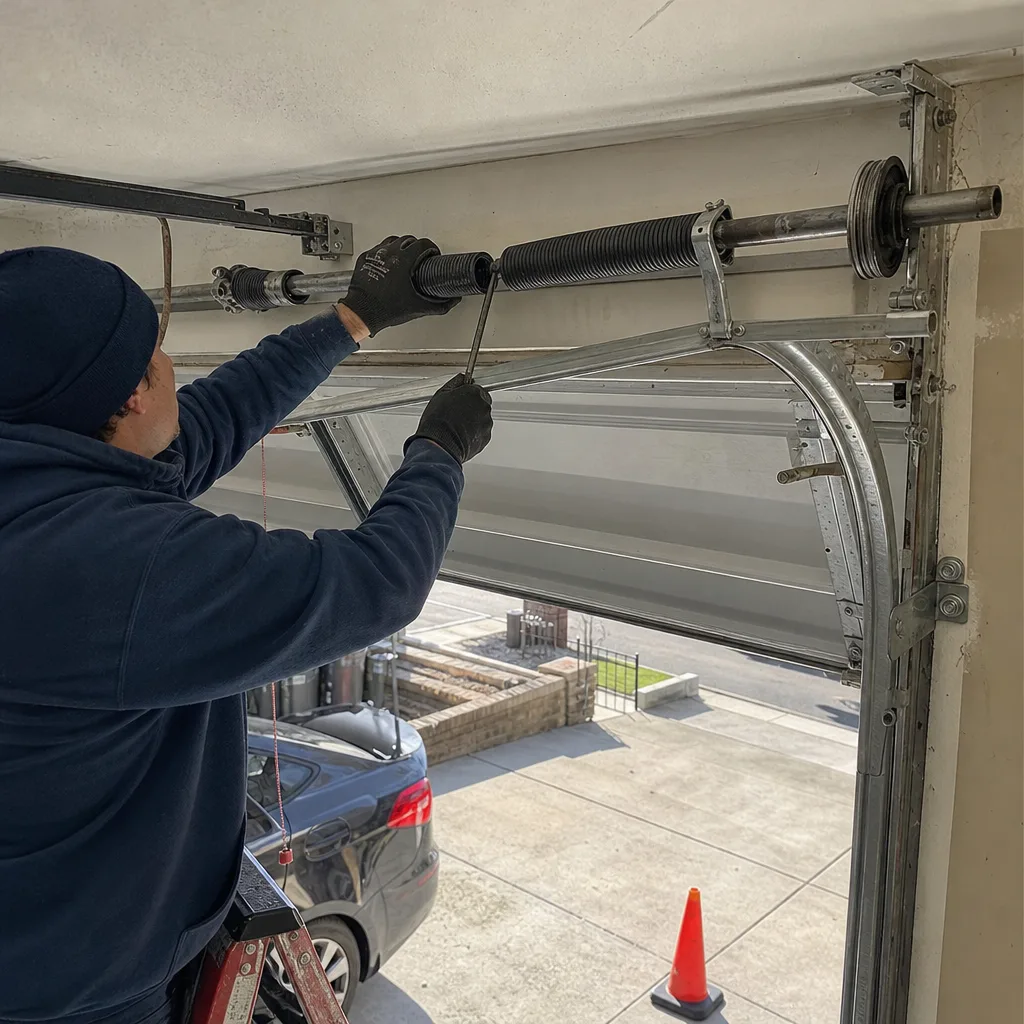
Last updated November 21, 2026
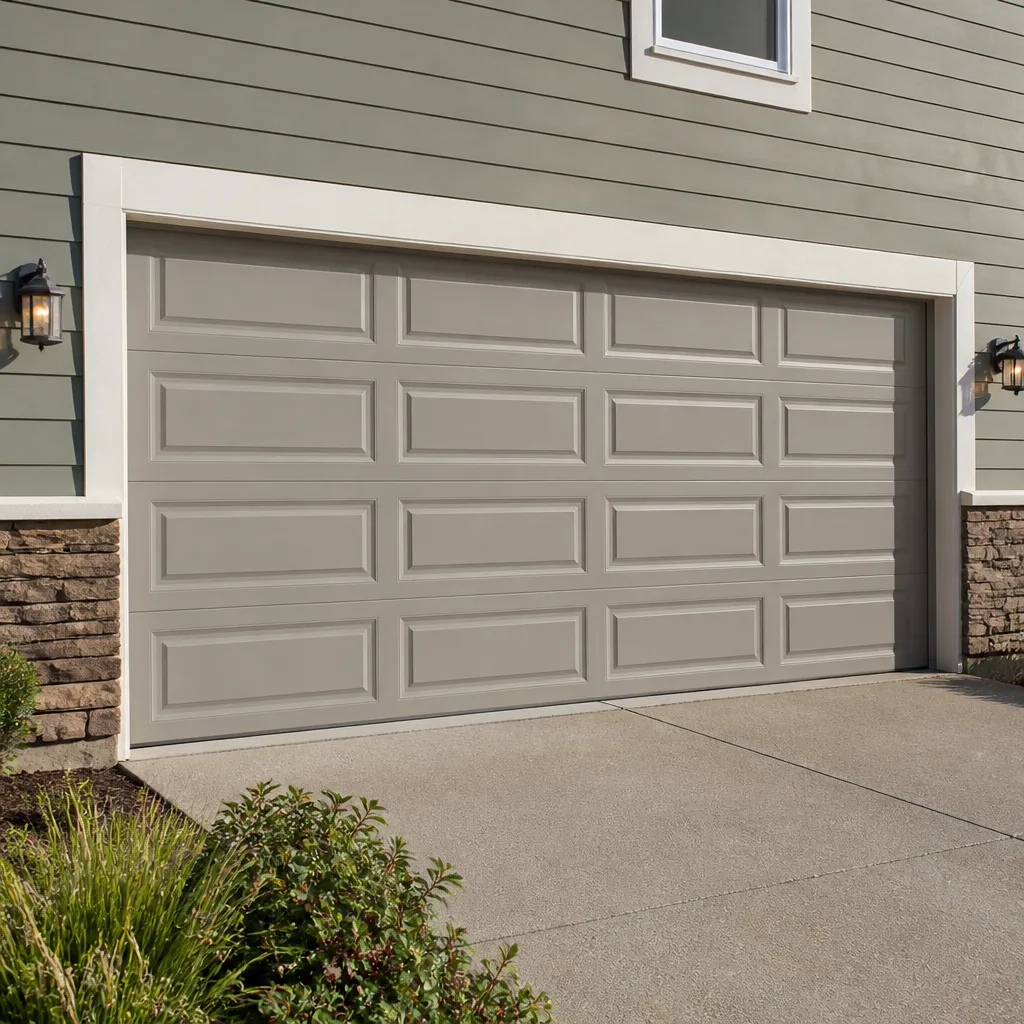 Raised-panel steel
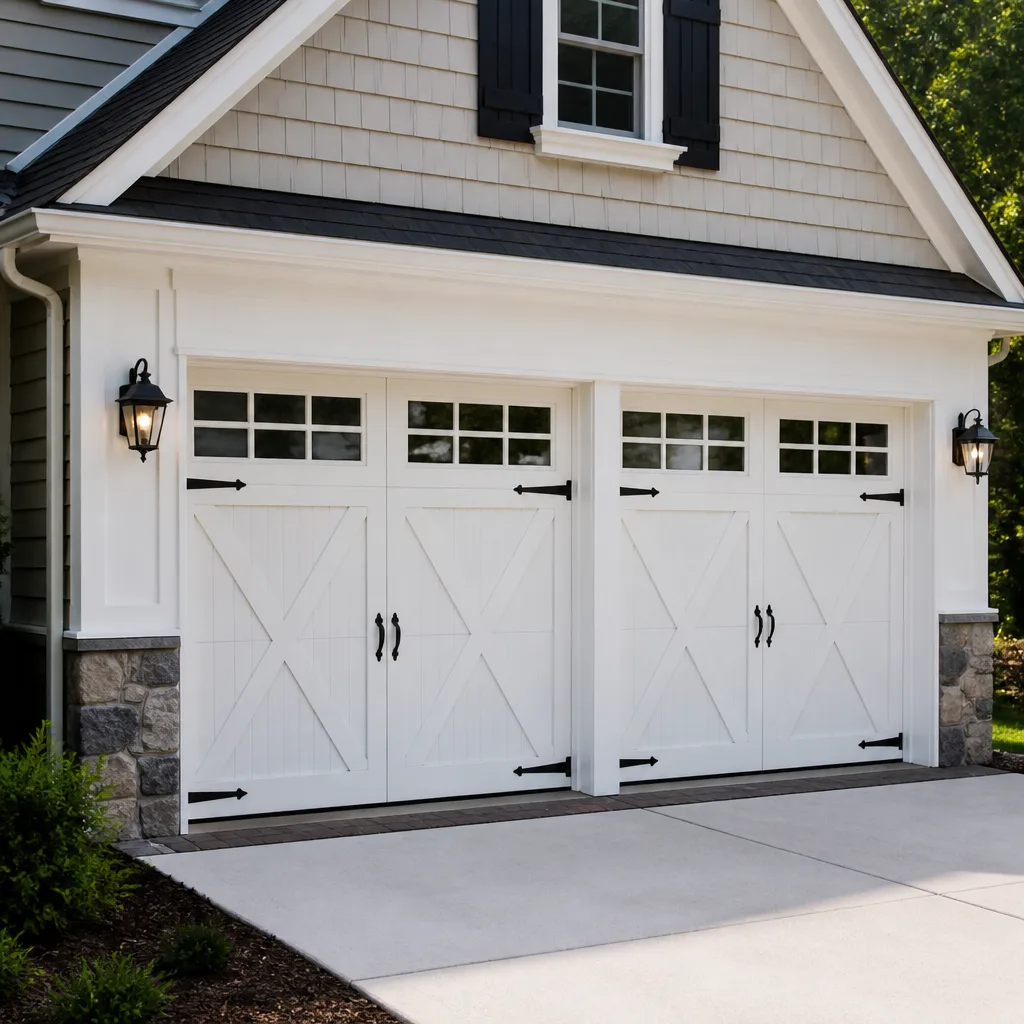 Carriage house
 Modern flush
 Full-view glass
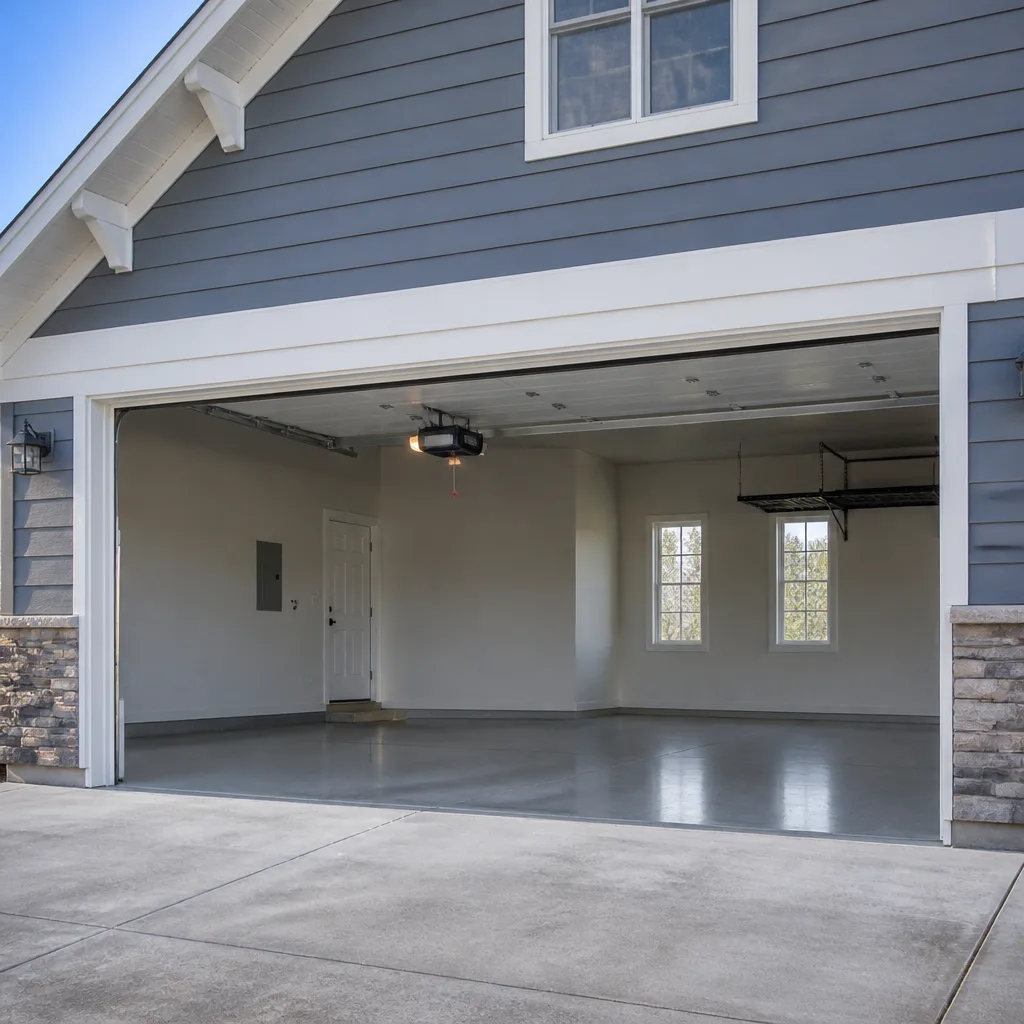 LiftMaster openers
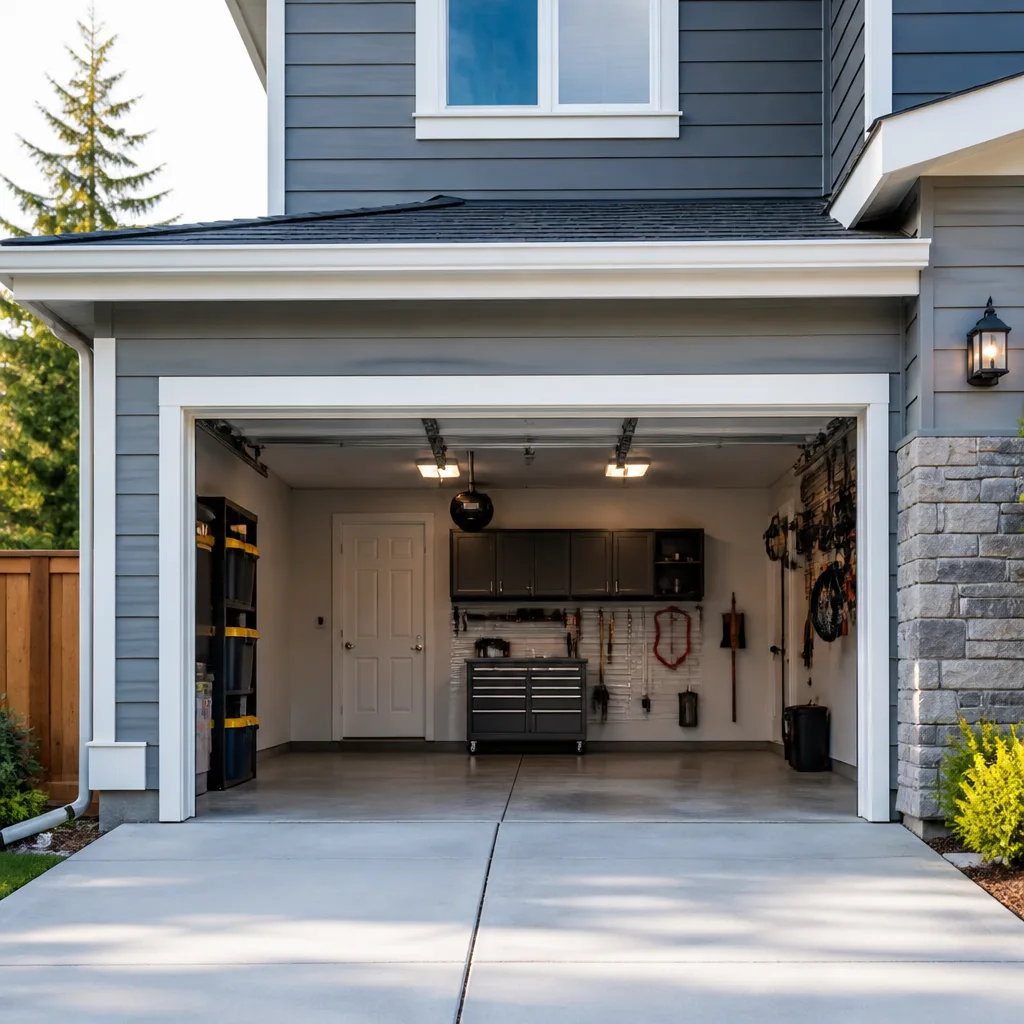 Chamberlain openers
Full 25-point door and opener safety check with every visit - springs, cables, rollers, tracks, and your LiftMaster or Chamberlain opener included
You get a price before we start. It does not change when the pro arrives.
Get your free estimateGarage Door Emergency Preparedness Guide for Journal Square Homes
Most homeowners think preparedness means having a garage door company’s number saved. That’s the easiest part. The harder part, and the one that actually decides how a bad morning goes, is the first five minutes after something fails. When a cable snaps at 6:45 a.m. on a weekday, the most common first move is to grab the red release cord and try to lift the door by hand. That move assumes the door is sitting flat on its tracks. If a broken cable has left it cocked to one side, releasing it can send the whole thing down hard. This guide walks through the decision tree for each type of failure specific to Journal Square homes: what to do, what never to touch, and what to have ready before you call.
Quick Answer
Garage door emergency preparedness means knowing, before anything breaks, which failures you can safely manage yourself and which require a trained technician – and never forcing a door whose spring, cable, or track position you can’t verify. The five-step response is: stop using the opener, keep people and vehicles clear, look without touching, secure the opening if the door is up, then call a specialist with your door’s measurements and opener model ready. For spring, cable, and off-track failures, the safest first action is to leave the door exactly where it sits and call (833) 968-6578.
Styles & brands we work with
- Raised-panel steel
- Carriage house
- Modern flush
- Full-view glass
- LiftMaster openers
- Chamberlain openers
Table of Contents
- The Five-Step First Response to Any Garage Door Failure
- The Emergency Release Cord: When to Pull It and When Not To
- Failure-by-Failure Protocol: Stuck Closed, Stuck Open, Broken Spring, Cable Off Drum, Off Track
- What to Have Ready Before You Call for Emergency Service
- How to Secure a Door Stuck in the Open Position
- Power Outage Protocol for Common New Jersey Openers
- Preventive Checks for Journal Square Doors
The Five-Step First Response to Any Garage Door Failure
Every garage door emergency follows the same opening sequence, regardless of what actually broke. Get this order right and you avoid the two things that turn a repair into a replacement: dropping a door on a car or a person, and running the opener against a jammed mechanism until the motor or the door panel gives out.
- Stop pressing the button. Whatever the opener did the first time, it will do it again or worse. Repeated cycling against a broken spring or a cable off its drum strains the opener’s gear and can bend panels. Leave the opener alone.
- Keep people and vehicles clear. Move anything under the door. If a car is parked inside, don’t drive it out through a door that’s hanging unevenly. If a person is standing under it, they move first.
- Look without touching. From the side, with the door in view, check whether the door hangs level or tilted, whether a spring is visibly snapped, whether a cable is loose or off its drum, and whether a roller has left its track. You’re gathering information, not fixing anything.
- Secure the opening. If the door is stuck open, the house is exposed to the street. If it’s stuck closed, the car is trapped. Both are addressed below.
- Call a garage door specialist. Have your measurements and model number ready. For any spring, cable, or track failure, this is where you stop and hand it off, because the next step requires trained hands and the right tools.
The reason this sequence matters more in Journal Square than in a suburban cul-de-sac is proximity. Many Journal Square homes sit close to the sidewalk, with the garage as the first thing a passerby sees. A door stuck open overnight is visible from the street in a way it might not be on a long suburban driveway. The security half of the problem is real here.
The Emergency Release Cord: When to Pull It and When Not To
The red emergency release cord disconnects the door from the opener so you can lift the door by hand during a power outage. It does not fix anything mechanical, and pulling it does nothing to a broken spring or a cable that has jumped its drum. That’s the part most people get wrong: the cord looks like the universal answer to a stuck door, so it gets pulled first. On a door that’s already compromised, pulling it can be the worst move available.
Pull the cord when
- The door is fully closed, sitting flat and level on the floor.
- The opener has power but won’t run, or there’s no power at all.
- No spring is visibly broken and no cable is hanging loose.
- You only need to lift the door a little to move a car in or out, and you can lower it back under control.
Do not pull the cord when
- A spring is visibly snapped, stretched, or hanging.
- A cable is off its drum or lying slack along the track.
- The door is crooked, sagging on one side, or has a roller out of its track.
- You can’t see the whole door clearly from where you’re standing.
Here’s the reason for that second list. A garage door’s weight is carried by the springs, and the springs run under heavy tension. A door with a broken spring or a cable off its drum is being held by whatever’s left of its hardware, and that hardware is often in an awkward, uneven position. Release the door from the opener in that state and the door can come down fast, or bind and jam so hard that a technician has to cut hardware off. We’ve seen both. The safe rule is simple: if you can’t see the whole door hanging flat, level, and unharmed, leave the cord alone.
The release cord is also the first thing a technician will ask about when you call, so know where yours is before you need it. It typically hangs from the opener’s trolley and is red. It should be reachable with a step stool or a hook rather than a ladder, since reaching for it from a ladder under a door that might move is a bad idea. If it’s tangled, cut short, or can’t be reached, that’s worth fixing before an emergency forces the question.
Failure-by-Failure Protocol: Stuck Closed, Stuck Open, Broken Spring, Cable Off Drum, Off Track
Each failure type has its own safe response, because each one leaves the door in a different mechanical state. A spring break is a tension problem. A door off track is an alignment problem. A stuck-open door is a security problem. Grouping them as “the garage door broke” and reaching for the same fix leads to mistakes.
Stuck closed
If the door won’t open but the opener runs and stops, or the opener lights flash and nothing happens, the most common cause is a safety sensor issue or a dead opener. Stay calm on this one, since nothing dangerous is happening. Confirm the sensors on both sides of the door aren’t blocked by a garbage can, a bike, or a sweep of snow, then try once more. If it still won’t move, the question is whether you need the door open right now, because a car is trapped, or whether you can wait for a scheduled repair. You don’t need to force anything.
Stuck open
This is the case with the most urgency in Journal Square, because an open door overnight exposes the property. Don’t try to close the door by hand with the opener engaged, and don’t keep pressing the remote hoping it will catch. Secure the opening first (see the section below), then call. If the door is off its tracks or sagging, closing it by force can drop it.
Broken spring
A broken torsion spring usually announces itself with a bang that sounds like a gunshot from inside the house. If the door is fully closed when it happens, the safest thing you can do is nothing: leave the door down, keep the cars where they are if they’re outside, and call. If the door was open when the spring let go, don’t close it. A door with no working spring has only the opener holding it, and the opener isn’t built to support that load. Springs are the one part of a garage door that should never be touched without training and the correct winding bars, and we’d rather you wait for a technician than test a spring by hand.
Cable off drum
A cable that has jumped its drum typically produces a slack cable hanging along one track, and a door that has dropped slightly on one side. The door is being held unevenly, and the cable itself carries dangerous tension even when it looks loose and harmless. Don’t touch the cable, don’t try to guide it back onto the drum, and don’t operate the door. This is a stop-everything failure.
Door off track
A roller out of its track usually shows up as a door that hangs crooked, drags on one side, or won’t close all the way. Forcing the door up or down can bend a panel or throw it further out of alignment. If it’s partly open and crooked, leave it exactly where it is and call. If it’s closed and crooked, the same rule applies.
What to Have Ready Before You Call for Emergency Service
The single biggest factor in how fast an emergency repair goes is how much information the technician has before they arrive. A technician who knows the door’s size, weight, and opener model before showing up can bring the right parts. A technician who gets a five-second description on the phone has to diagnose first, then go get what’s missing.
Have these ready:
- Door width and height. Measure the inside of the opening, not the door face. A tape measure gets you there in a minute, and it’s the number that determines panel size.
- Door material and type. Steel, aluminum, wood, or wood-composite; sectional or one-piece; insulated or not. Look at the door’s inner face or the label on the panel.
- Opener brand and model. The model number is usually on a sticker on the motor housing, the same place you’d find it on a Wayne Dalton or LiftMaster unit. Snap a photo of the label.
- Symptom description. Not “it’s broken” but “the door hangs crooked and one cable is hanging loose along the left track.” Specifics cut diagnosis time.
- Whether the door is open, closed, or partly open right now. This decides the technician’s safety setup on arrival.
- Whether anyone is trapped or any car is blocked. Say so on the call, not later.
If you have a multigrade photo showing the door, the opener label, and the broken part, that’s even better. One call with the right details typically saves a follow-up visit, and in an emergency, one fewer visit is the difference between the door working tonight or not.
How to Secure a Door Stuck in the Open Position
In Journal Square, a garage door stuck open at night is the thing that gets a call every week. The house is open to the street, and the owner is torn between leaving it and doing something risky. The safe move is to secure the opening without forcing the door. That means physically blocking the passage with the door already overhead, not trying to bring the door down.
- Park a vehicle in the opening if one is available. A car nose-in at the threshold closes off the view and blocks entry from the street. It’s not security in the strongest sense, but it’s the fastest step and the easiest to undo.
- Use a prop or brace under the door if the tracks are sound. A step ladder, a heavy workbench, or a pair of posts placed under a door that’s fully open and sitting flat on solid tracks can hold it in place if gravity pulls on it. Do not do this if the door is crooked or off its track.
- Attach a temporary closure from the inside when the door can’t be blocked. A sheet of plywood across the opening screwed into the frame, or a heavy tarp with its lower edge weighted down, keeps the opening visually closed and blocks casual entry. Neither is a substitute for a working door, but both buy you a night.
- Disengage the opener only if the door is fully up and level. Release the emergency cord, then test the door by hand for a couple of inches – it should feel solid and stay put. If it doesn’t, engage the opener again and leave the door alone.
- Call us. We answer 24/7. A door that fails on a Saturday can still be booked on the phone. A call outside dispatch hours is booked into the next opening, Sunday through Friday, 7am to 7pm.
The house behind each door matters here too. Journal Square has a mix of two- and three-family homes and small apartment buildings where the garage often sits under living space, and a stuck door on the lower level can expose a stairwell or a sidewalk-facing window. That’s why securing the opening comes before diagnostics for a broken door. Lock the interior door that connects the garage to the house if there’s one.
Power Outage Protocol for Common New Jersey Openers
When the power goes out, most openers go quiet and one lever does all the work: the emergency release. The trick is that different opener families present the release differently, and if you’ve never looked at yours, you’ll be hunting for it in the dark with a dying phone.
- LiftMaster and Chamberlain: The release handle hangs from the trolley on a red cord. Pull straight down and the door disengages. On belt-drive models the release action is the same. If your unit has a battery backup, the door still runs and you can wait the outage out without disengaging.
- Craftsman: The trolley release is similar in layout, with a short pull cord. Some older Craftsman units locate the release handle near the motor rather than the center of the door, so it’s worth checking once before an outage forces the issue.
- Raynor: Raynor operators are common in this area on heavier doors, and the release is a lever on the trolley rather than a cord on some models. Look for a red handle or lever at the trolley and pull it toward the door.
- Battery backup: Some openers have a backup battery pack in the motor housing. If you have one, the door should cycle a limited number of times during an outage; test it once a year so you know before the night you need it.
Once you’ve disengaged, lift the door by hand to open or close it, and re-engage the opener only when the door is fully in one position. If it’s a LiftMaster unit with a battery, don’t disengage the door at all: it will work on the battery. And if you have to open the door by hand more than a few times, the door itself is heavier than the release is meant to carry for long; call us and we’ll take a look at the balance of the door.
Preventive Checks for Journal Square Doors
The best emergency is the one you never have. A garage door gives plenty of warning, and five minutes of looking once a month catches most failures before they happen during a school run.
What to check, in order, from outside the door:
- Listen. A door that thuds, grinds, or squeals is telling you a roller, hinge, or spring is wearing. Quiet is healthy.
- Look at the springs. A torsion spring that looks stretched, or a gap in the coils, is a warning. Don’t touch. Note it and call.
- Look at the cables. They should be evenly tensioned on both sides, lying tight to the drums. Slack or visible fraying means it’s time for a professional look.
- Lift test. Disengage the opener, lift the door to waist height, and let go. A correctly balanced door stays put. A door that drops or climbs is out of balance and the springs are tired.
- Safety sensor check. Wave an object across the sensor beam while the door is closing. It should reverse. If not, that’s a safety issue worth fixing before it matters.
- Weather seal and frame. A door that won’t seal lets in the cold, which in this part of New Jersey is a real winter drain.
One local factor matters here: winter. Journal Square garages, especially the ones behind row houses with narrow driveways and low overhangs, get packed snow and ice at the base of the door. Ice at the threshold jams doors on winter mornings more than any mechanical failure. Clearing the base of the door after a storm, and not forcing a door that’s frozen to the ground, prevents the cable and panel damage that comes from repeated straining.
Common Mistakes to Avoid
- Pulling the emergency cord first, before diagnosing. The cord is for disconnecting a healthy door from a dead opener. On a door with a broken cable or spring, it can cause the door to drop or bind.
- Repeatedly pressing the opener against a jammed door. Each cycle strains the motor and the door’s hardware. One attempt to see what it does, then stop.
- Lifting a crocked door by hand to force it closed. Crooked means something is already out of alignment. Force on a door like that bends panels and can break a roller out the rest of the way.
- Touching a cable that’s off its drum. A slack cable can still hold heavy tension. Leave it and call.
- Leaving a Journal Square door propped open overnight to “come back to it.” On streets with close neighbors and sidewalk access, an open garage is an invitation. Secure it before you sleep.
- Calling a general handyman for a spring. Springs are not general-repair work. They need a garage door specialist with the right winding tools, and the wrong tools are dangerous for everyone in the room.
- Waiting for a Saturday call to sort itself out. We’re closed Saturday, and the phone is answered 24/7, so a failure that shows up Saturday can be booked for Sunday rather than left until next week.
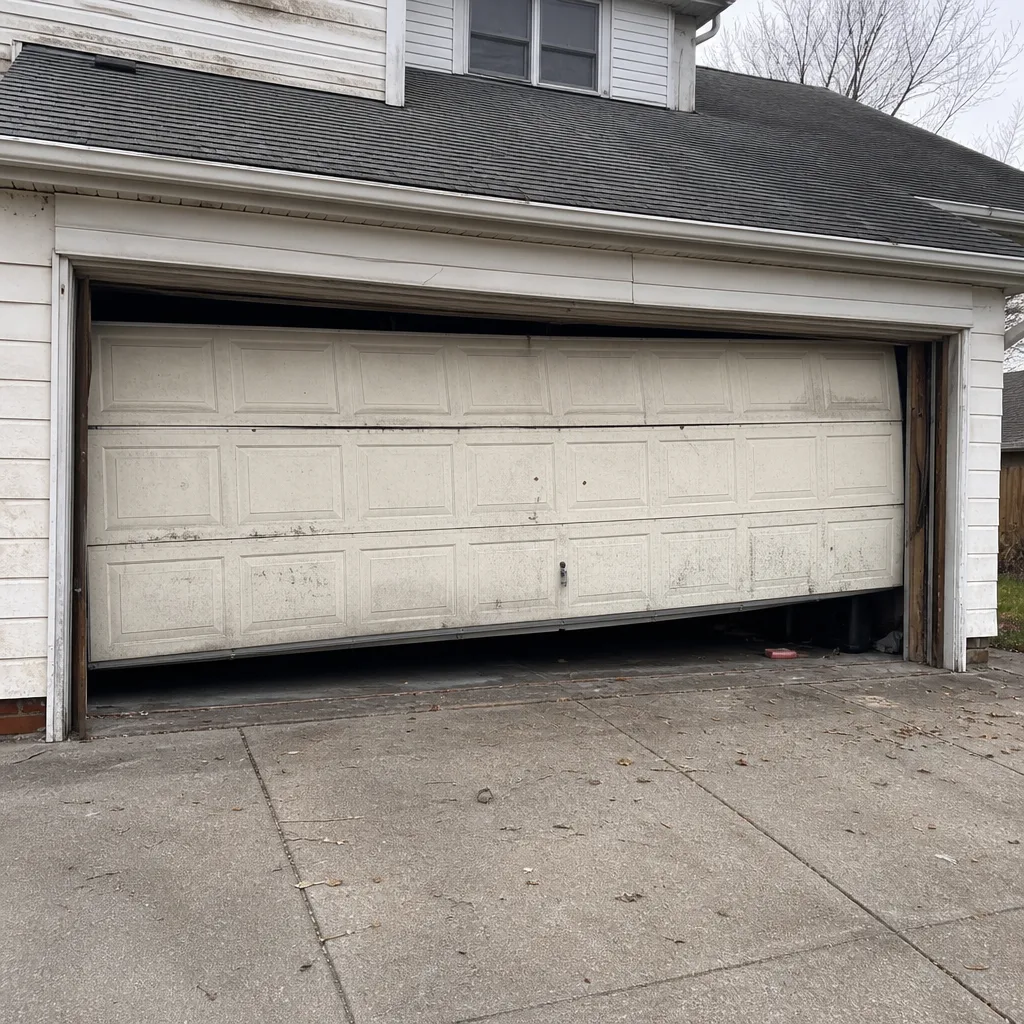
See the difference
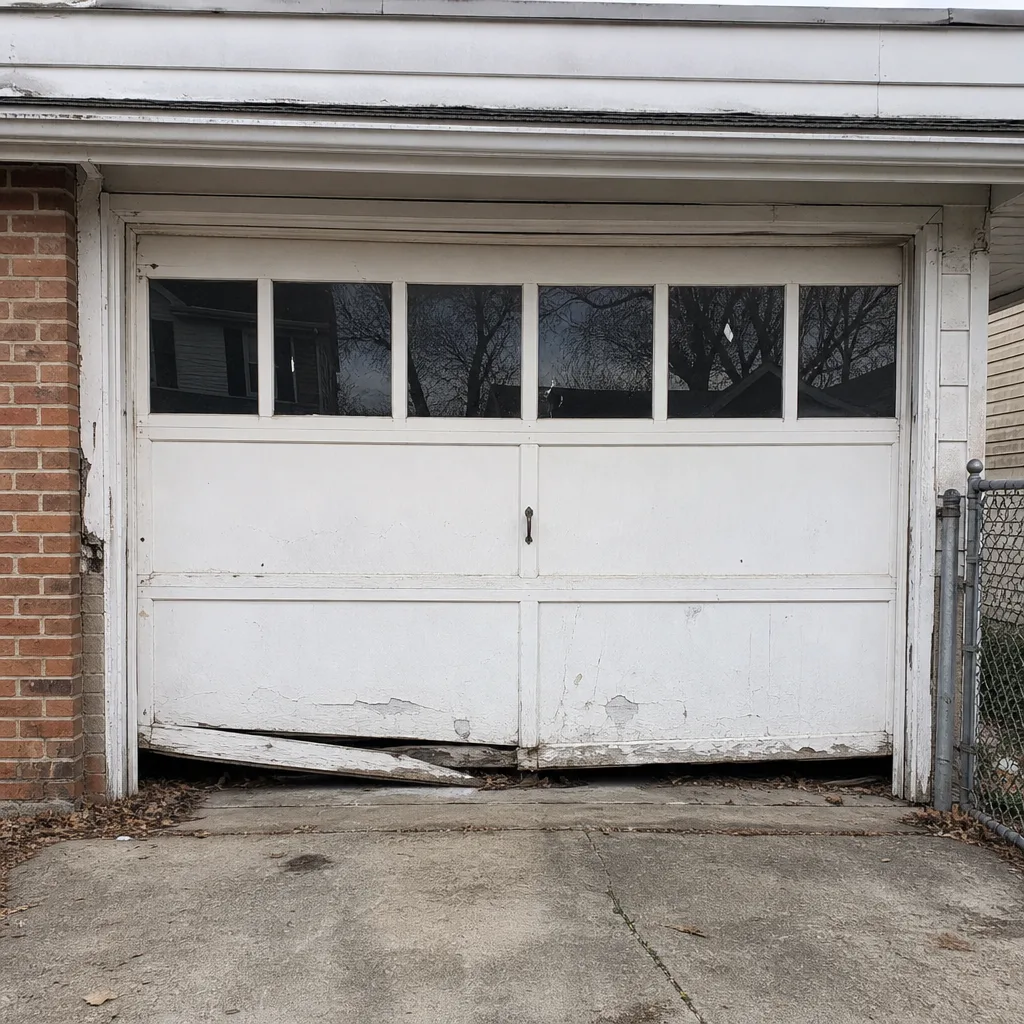 Before
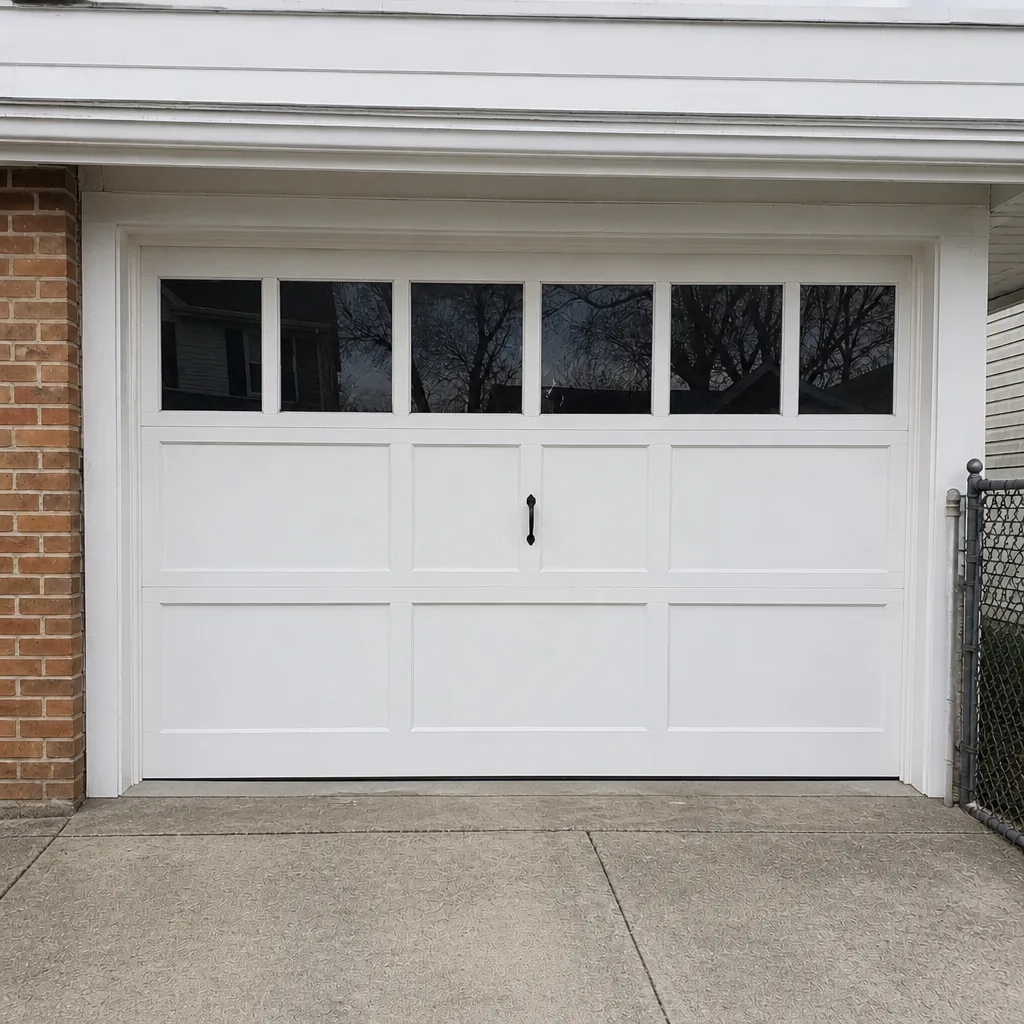 After
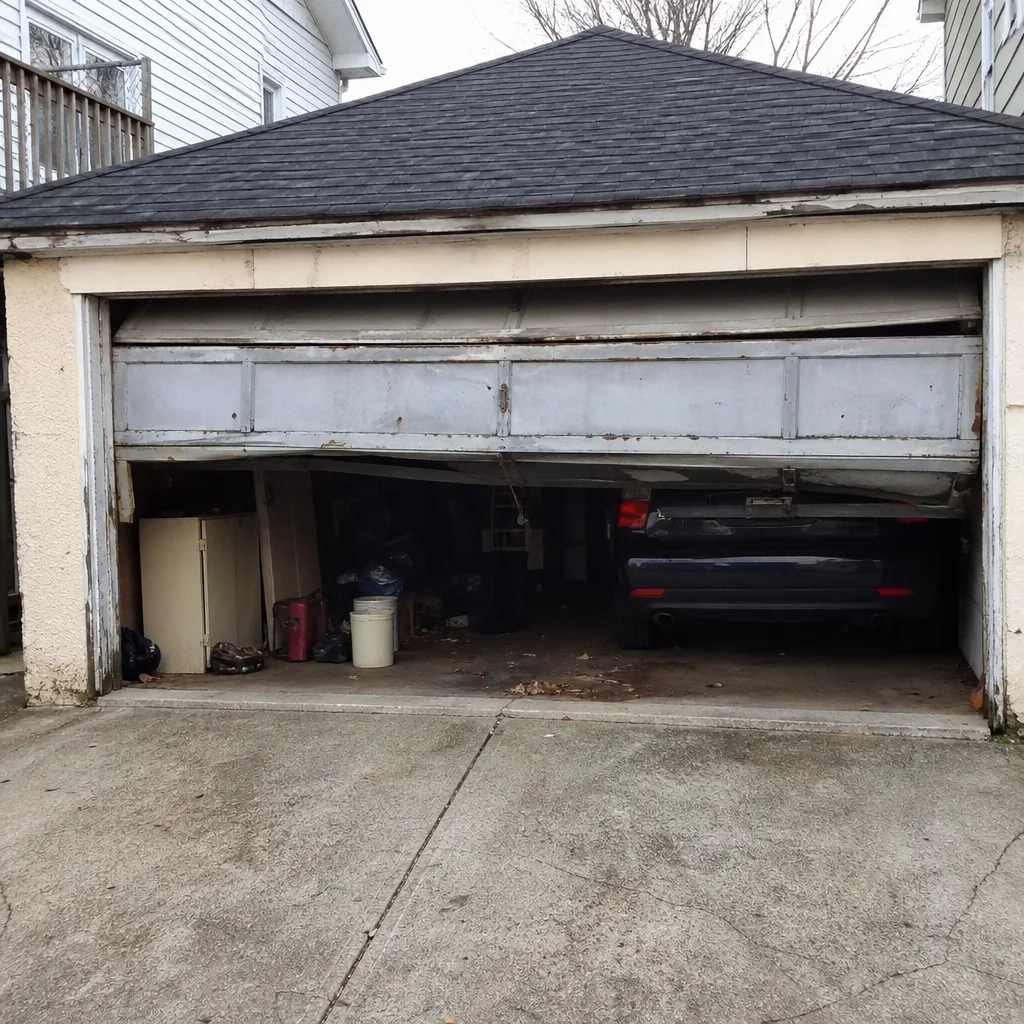 Before
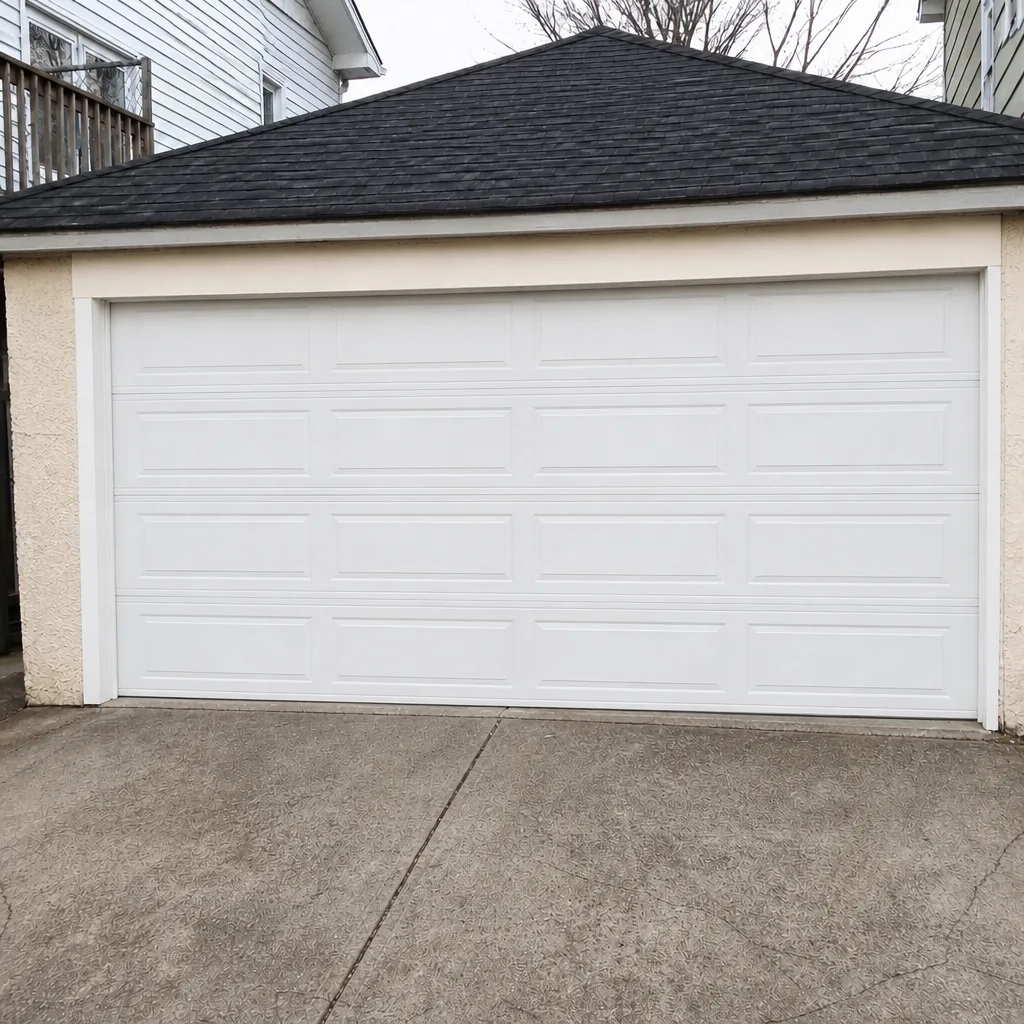 After
 Before
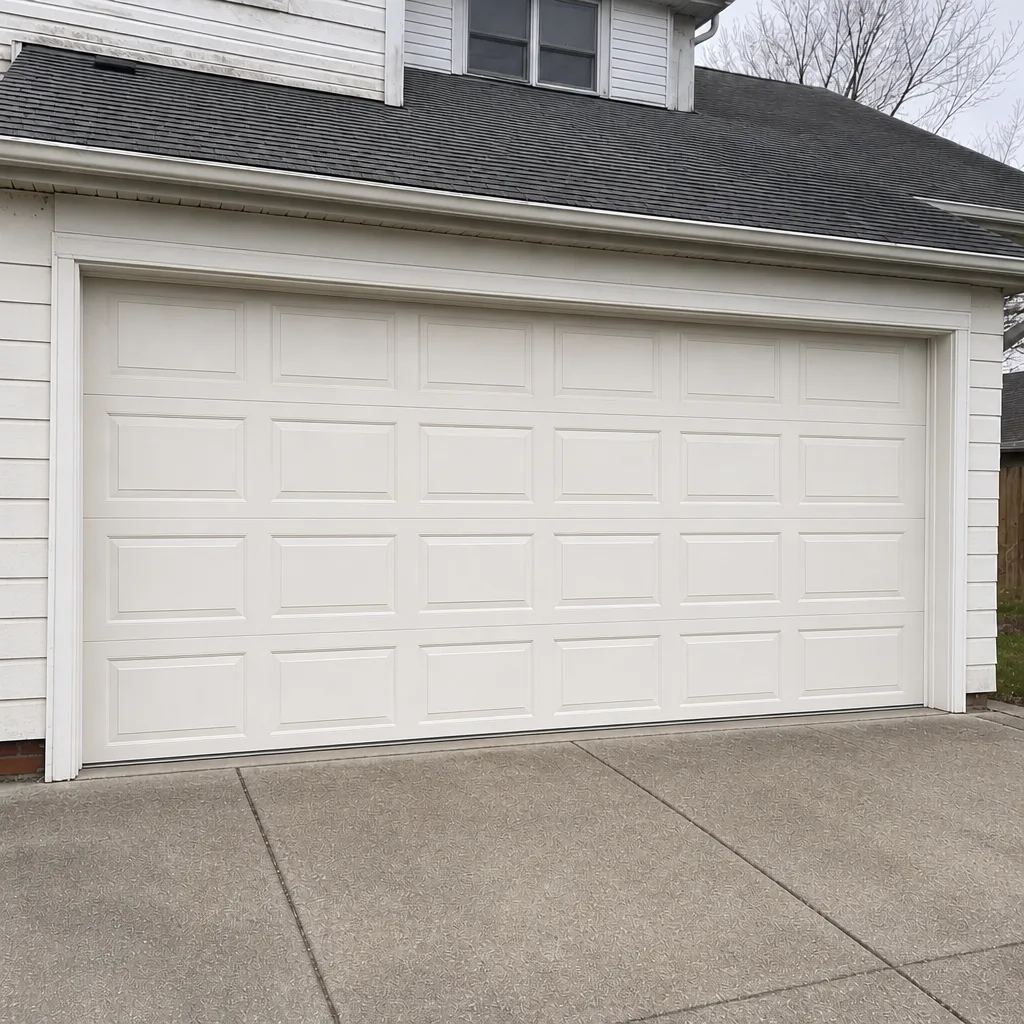 After
When to Call a Professional
Call a specialist whenever the failure involves a spring, a cable, a track, or a door that’s hanging unevenly. Those five failure types all share one trait: the door’s weight is no longer controlled by hardware you can safely assess by eye, and the fix requires winding bars, proper c-clamps, and training. You should also call if the opener cycles erratically after a power outage, if the door reverses on its own, or if the door has been lifting heavily for weeks. For a light bulb in the opener, a stuck remote, or a safety sensor nudged out of line, you can often manage it yourself. For anything touching the door’s mechanical system, the correct call is a garage door specialist, and our technicians have up to 8 years of experience with the eight major brands.
Garage Door Repair Journal Square offers free estimates in Journal Square – call (833) 968-6578. We answer 24/7. Fast dispatch from 7am to 7pm, Sunday through Friday. If you’re not sure whether it’s an emergency, call and describe what the door is doing; we’ll help you decide whether to wait or book a visit.
Frequently Asked Questions
Leave the door exactly where it is and call a specialist. Don’t try to open the door with the opener, and don’t touch the spring or the cables; the door has lost the part that carries its weight, and the opener isn’t built to take over that load. If the door is closed, keep it closed and keep cars clear of it. Call (833) 968-6578 for an exact quote – estimates are free.
Emergency garage door work is priced per job by a written estimate, not by the clock, so the price you agree before work starts is the price you pay. Spring replacement is usually the most expensive common repair because a pair is normally replaced together, and opener repairs and off-track corrections sit lower. Call (833) 968-6578 for an exact quote – estimates are free.
In many cases, yes. A door stuck open is a security problem in Journal Square, so we prioritise it, and a call placed early can often get a technician out the same day. A call outside dispatch hours is booked into the next opening, Sunday through Friday, 7am to 7pm. Call (833) 968-6578 for an exact quote – estimates are free.
The local professional we connect you with is licensed and insured as their state requires. They’re garage door specialists, not general handymen, which matters most on spring, cable, and track work where the wrong tool or the wrong approach is dangerous. Call (833) 968-6578 for an exact quote – estimates are free.
No – the written estimate you agree to before work starts is the price, and any change would only come from something you approve in advance. We don’t quote one number and bill another after the door is opened up. Call (833) 968-6578 for an exact quote – estimates are free.
We answer 24/7, and crews are dispatched Sunday through Friday, 7am to 7pm, so a Saturday failure is booked into the next opening. The phone line stays open for the call outside those hours, and the door can be made safe before then using the securing steps above. Call (833) 968-6578 for an exact quote – estimates are free.
Yes, if the door is fully closed and hanging level, and no spring or cable is damaged. Pull the emergency release cord straight down, lift the door by hand, and re-engage the opener only when the door is fully open or fully closed. If your opener has a battery backup, you don’t need to disengage it at all. If the door looks crooked, don’t pull the cord – call us instead.
The Bottom Line
Emergency preparedness for a Journal Square garage door comes down to three things: knowing which failures are safe to manage and which need a technician, knowing what not to touch when a spring or cable lets go, and having the details a technician needs to arrive with the right parts. The first five minutes decide how bad the day gets, so stay off the emergency cord on a compromised door, secure the opening if the door is up, and call with your measurements and opener model already in hand. Everything from a stuck sensor to a snapped spring, on an opener or a door from LiftMaster, Wayne Dalton, Clopay, or Amarr, falls under one type of specialist, which means one call instead of a search. Call (833) 968-6578 for a free estimate. We answer 24/7. Fast dispatch from 7am to 7pm, Sunday through Friday.
Written by the team at Garage Door Repair Journal Square.