
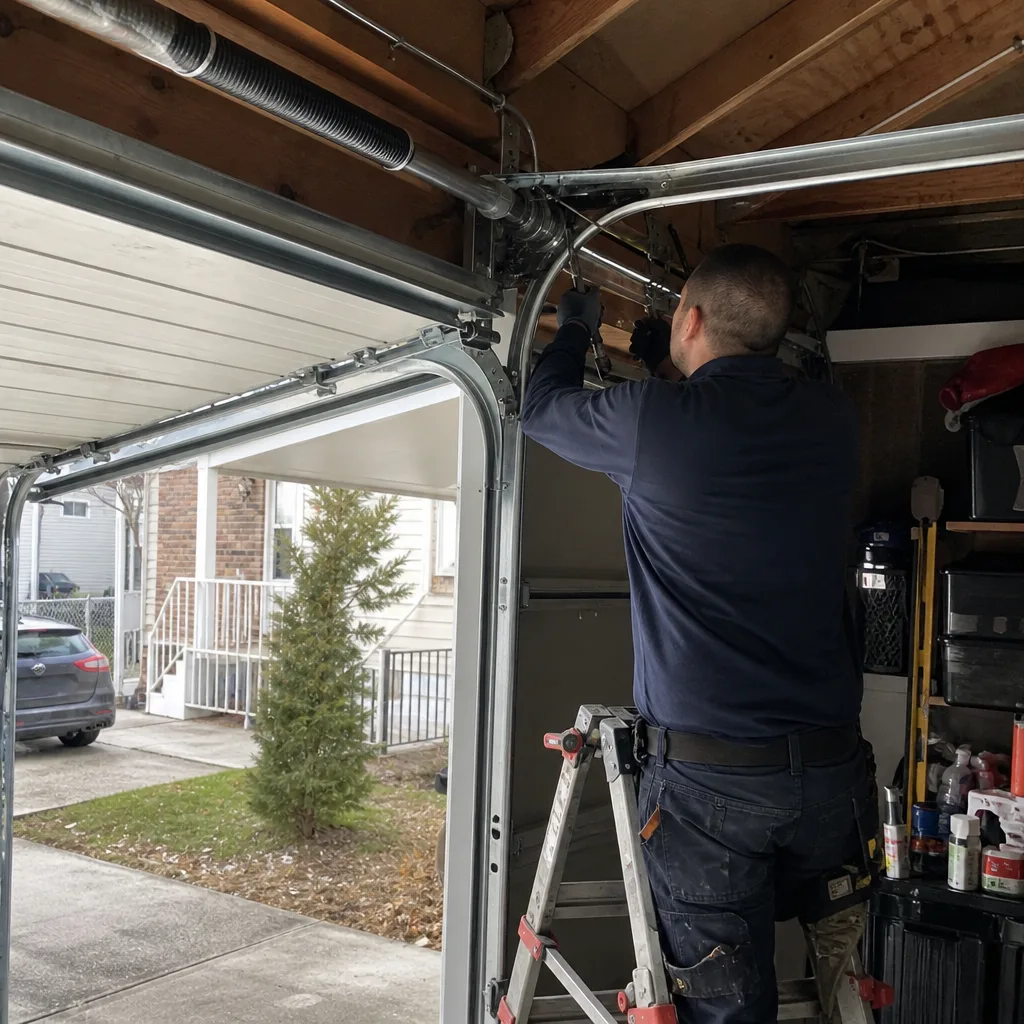
Last updated November 21, 2026
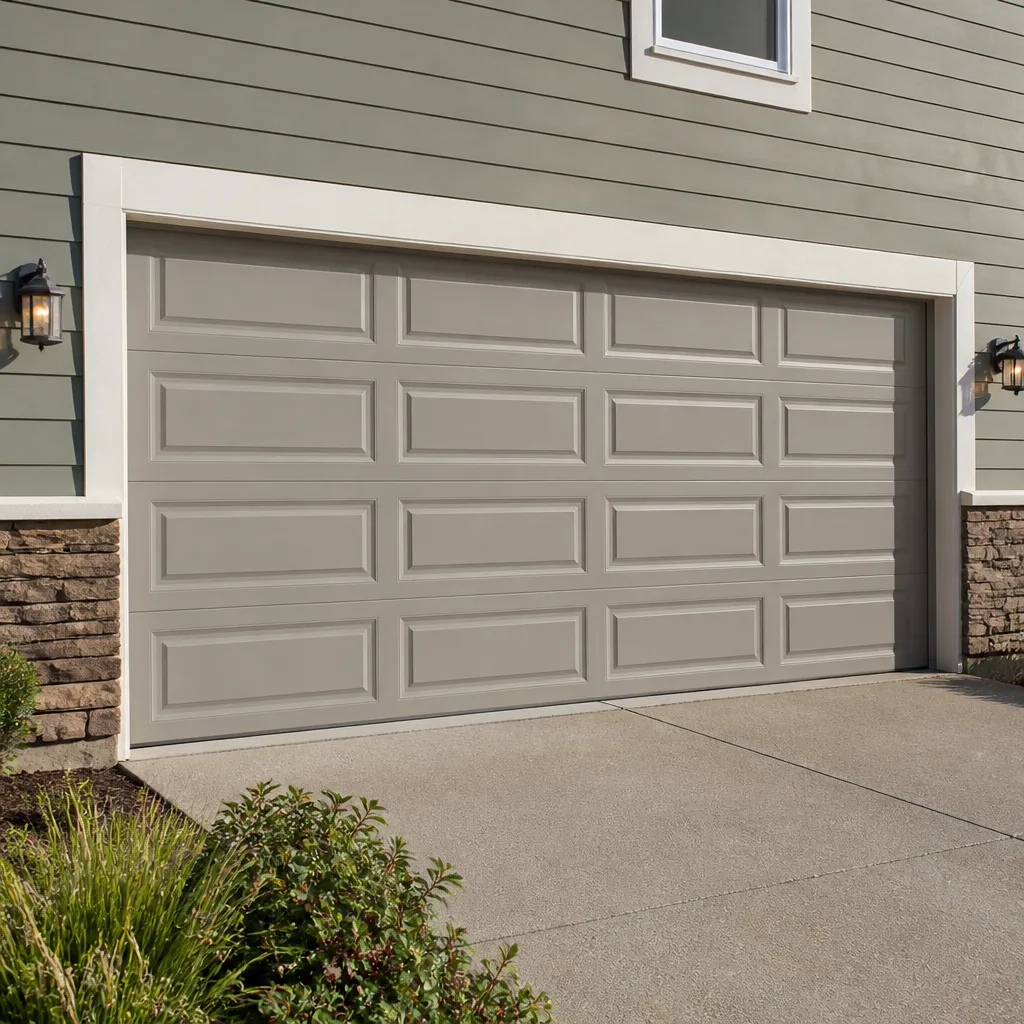 Raised-panel steel
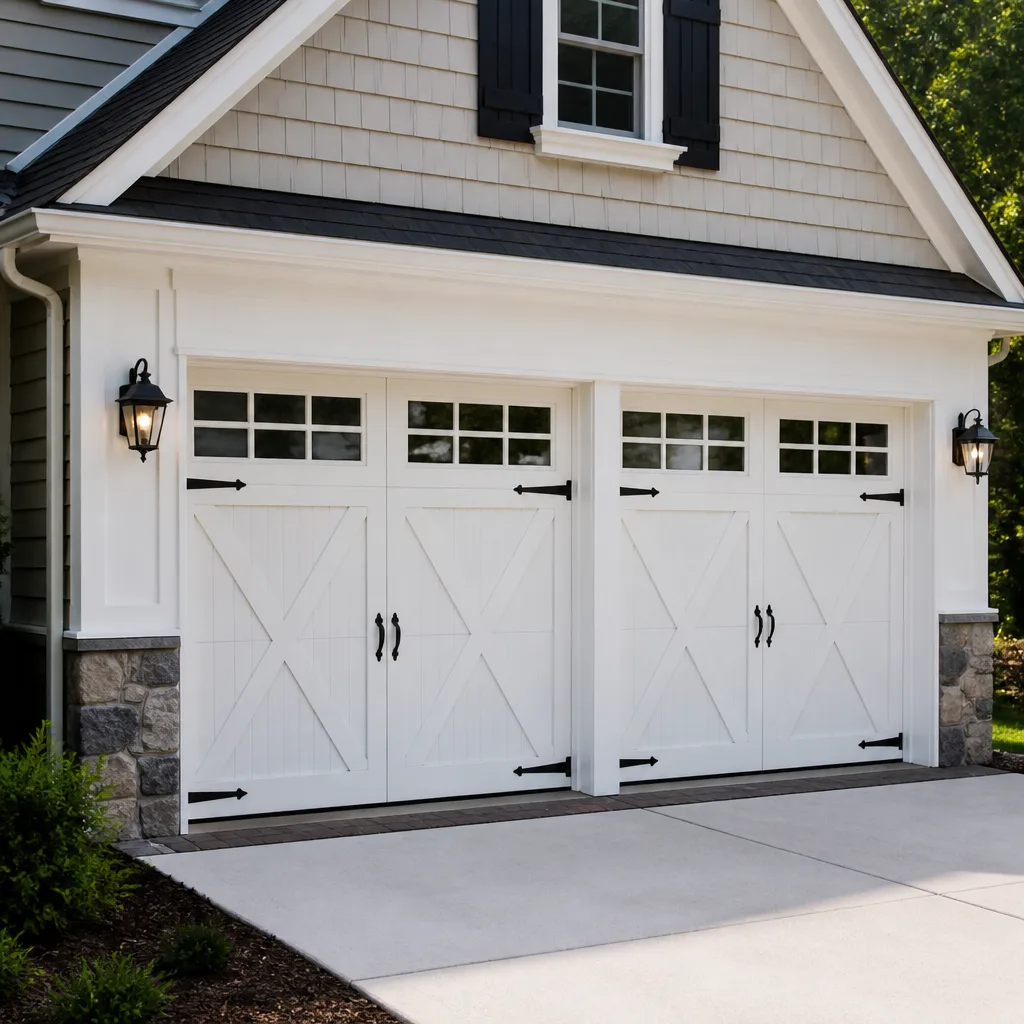 Carriage house
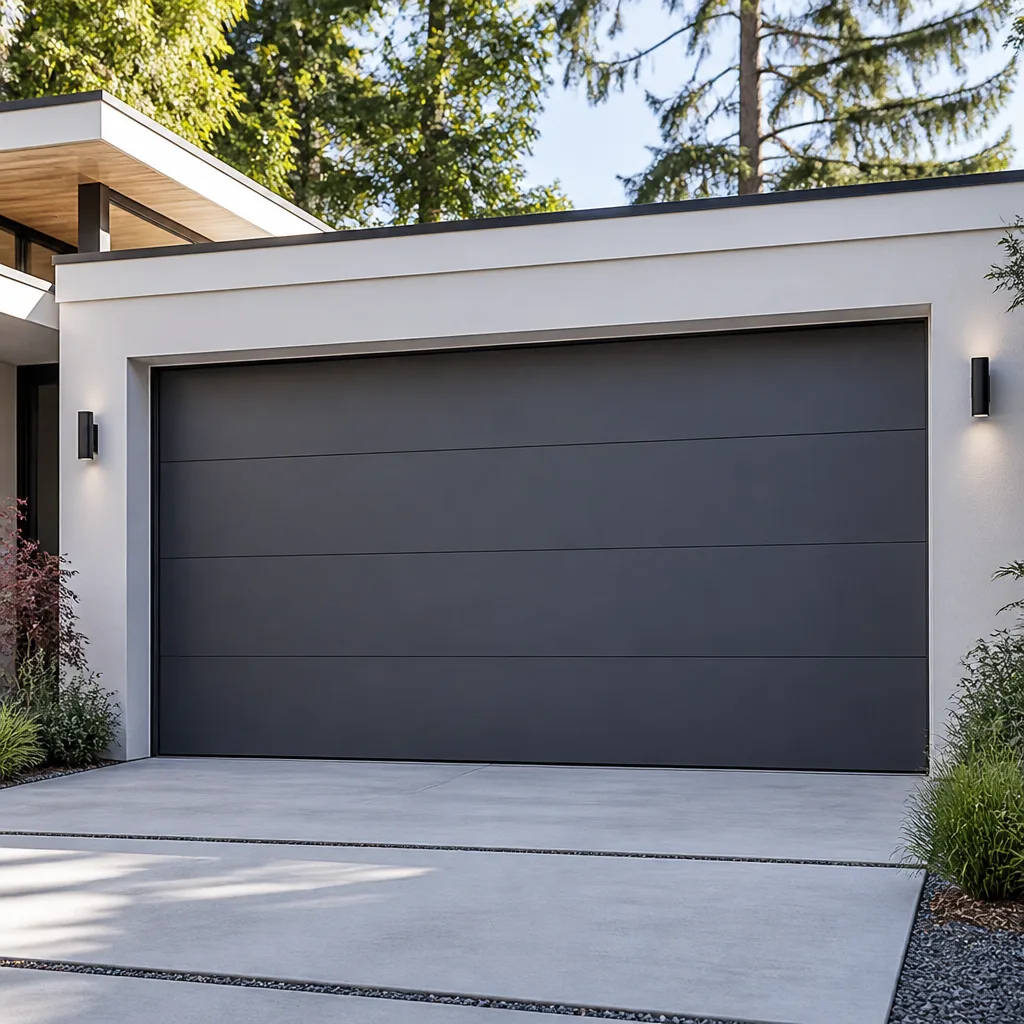 Modern flush
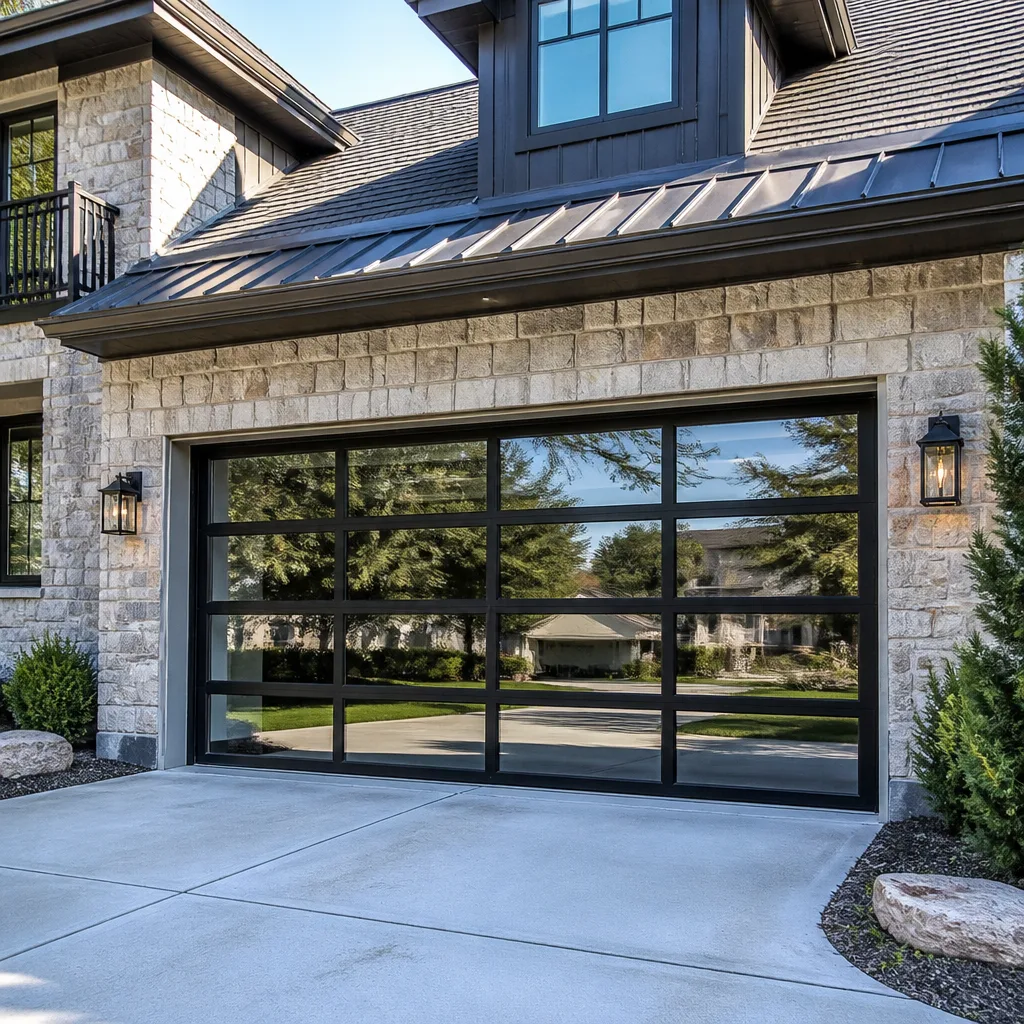 Full-view glass
 LiftMaster openers
 Chamberlain openers
Full 25-point door and opener safety check with every visit - springs, cables, rollers, tracks, and your LiftMaster or Chamberlain opener included
You get a price before we start. It does not change when the pro arrives.
Get your free estimateGarage Door Warning Signs: A Journal Square Homeowner’s Reference Guide
A door that takes three seconds longer to open than it did six months ago isn’t just slow – it’s telling you the opener is working harder to compensate for something the mechanical system is no longer doing. Most garage door failures don’t arrive out of nowhere. They announce themselves first, quietly, in sounds and small movements that most homeowners have no baseline to compare against. That’s the real problem: not that doors fail, but that nobody teaches you what “normal” looks and sounds like, so the early signals pass unnoticed until a spring snaps or a cable lets go. This guide gives you that baseline. You’ll learn what each sound points to at the component level, which visual clues are easy to miss, how to run a sixty-second balance test, and which warnings mean “schedule it” versus “stop using the door now.”
Quick Answer
Garage door warning signs fall into three categories: sounds (grinding, popping, squealing, rattling), visual clues (frayed cables, an uneven bottom gap, hairline panel cracks), and behavior (the door reversing before it closes, opener lights flashing, remotes needing multiple presses). Any single sign is a reason to schedule service. A door that reverses, hangs unevenly, or has a visibly frayed cable is a reason to stop using it immediately and call a specialist.
Styles & brands we work with
- Raised-panel steel
- Carriage house
- Modern flush
- Full-view glass
- LiftMaster openers
- Chamberlain openers
Table of Contents
- Why Garage Door Failures Give Notice First
- Sound Diagnosis: What Each Noise Tells You at the Component Level
- The Visual Signs Most Homeowners Miss
- Behavioral Signs and Their Specific Causes
- The 60-Second Balance Test and the Two-Inch Rule
- Schedule vs. Stop: Which Warnings Allow an Appointment
- How Journal Square Conditions Affect Wear
- Common Mistakes to Avoid
Why Garage Door Failures Give Notice First
A garage door is the largest moving object in a house, and it moves on a pretty unforgiving system: torsion or extension springs balancing hundreds of pounds, steel cables winding around drums, rollers tracking inside rails, and an opener pushing and pulling the whole assembly. Every one of those parts wears gradually. None of them fail silently. What looks like a sudden failure is almost always the last step in a slow decline that nobody noticed.
We see this constantly across Journal Square, where a lot of homes are attached rowhouses and multi-family buildings with garages that get heavy daily use. A door that cycles eight, ten, twelve times a day accumulates far more wear than one used twice, and the warning window before failure gets shorter. The homeowner who learns what normal sounds and feels like catches problems while they’re still inexpensive. The one who doesn’t gets a call when the door won’t move at all.
Here’s the useful part: a garage door doesn’t hide its problems. It broadcasts them through sound, through visible wear at specific mounting points and hardware connections, and through how it behaves at the two moments it’s under the most load – opening and closing. Learning three things about your door, its normal sound, its normal speed, and its normal closing gap, gives you a diagnostic baseline you can check in seconds. That baseline is worth more than any tool in a toolbox, because it’s what lets you notice the difference between “fine” and “getting ready to fail.”
This guide is written from the perspective of a garage door specialist working in Journal Square, so every sign here has a component behind it. We focus entirely on garage doors – not plumbing, not HVAC, not general handyman work – which is why we can tell you that a popping sound near the ceiling usually points to the torsion spring, while a rattle that moves along with the door usually points to rollers or hinges. Those distinctions are what turn vague worry into a specific, fixable diagnosis.
Sound Diagnosis: What Each Noise Tells You at the Component Level
Not all garage door noises mean the same thing, and the difference matters. Each sound points to a specific component, and each component has a different urgency. Here’s how we break it down.
Grinding
Grinding sounds like metal scraping on metal, and it usually comes from one of two places: the rollers inside the track, or the opener’s gears and drive. Worn steel rollers that have lost their bearings produce a rough grinding as they pass through the curved sections of the track. If the grind comes from the unit mounted to the ceiling rather than the door itself, the opener’s internal gears are the likely cause – helical gears on many chain-drive units wear down over time and the plastic teeth strip. A grinding opener is working harder than it should, and it’s a sign to have it looked at before it quits entirely. This is work we handle as garage door opener repair, particularly on the widely installed LiftMaster and Chamberlain units in Journal Square.
Popping
A sharp pop, especially one that jolts the door at the start or end of its travel, points to the spring system. On a torsion system, this is a spring that’s beginning to bind or lose tension. On an extension system, it can be a stretched spring settling or a pulley pulling loose. Popping is a mechanical warning worth treating seriously, because the spring is carrying the full weight of the door. We’ll come back to spring safety later – it’s the one component where we always recommend a trained technician over a homeowner repair.
Squealing
Squealing is friction, and friction is usually the least urgent of these sounds – but it’s also the easiest to catch before it becomes something else. Worn rollers, dry hinges, and a dry torsion tube all squeal as the door moves. The fix is lubrication and worn-part replacement, and it’s the kind of thing that keeps the door balanced and the opener protected. Ignore it long enough, though, and the same friction that squeals accelerates wear on the parts it’s rubbing against.
Rattling
A rattle that travels along with the door, especially through the overhead sections, usually means loose hinges, loose panel mounting bolts, or worn roller stems that no longer seat tightly. Loose hardware adds vibration, and vibration works things further loose over time. On sectional doors, persistent rattling should be checked before it becomes misaligned panels or hardware pulled out of the mounting holes.
The Visual Signs Most Homeowners Miss
Sound gets your attention. Visual signs reward a careful look, and these are the ones that most often get missed because they sit in places nobody thinks to check. Do a quick inspection with the door closed and the opener disconnected, or with the door open depending on what you’re looking at.
- Cable fraying near the drum. Look at where the cables wind onto the drums at the top of the door. A cable that’s starting to fray, showing broken strands, or looking kinked has lost strength and needs attention before it fails.
- Asymmetric gap at the bottom seal. Close the door and look along the bottom edge. A gap that’s uneven – wide on one corner, tight on the other – means the door is off-level, which points to a spring or cable problem on one side.
- Hairline panel cracks around hardware mounting points. Look closely at the panel where the hinges and brackets bolt on. Small cracks radiating from a bolt hole are easy to miss, but they show the panel has been stressed by vibration or impact.
- Bent or worn track sections. Glance down the vertical and horizontal track from a few angles. Kinked or dented track, often from a bump by a car or a door that’s come off-line, will make rollers jump and the door lurch.
- Loose or missing bolts. Hinges and brackets loosen over time. Missing bolts allow the door to flex where it shouldn’t.
- Sagging or uneven door line. Step back and look at the door as a whole. A sectional door that’s not aligned across its top edge is telling you the balance mechanism needs attention.
None of these require you to fix anything yourself. They’re signs you collect, then describe to a specialist. A photo of a frayed cable or a crack at a hinge bracket gives a technician a huge head start on the right fix – and it’s the “same door, right fix” approach that avoids replacing parts that aren’t the problem. In Journal Square’s rowhouse and multi-family garages, where cars maneuver in tight spaces, that kind of nudge damage to track and panels shows up more than you might expect.
Behavioral Signs and Their Specific Causes
Behavioral signs are about how the door acts, not how it sounds. Each one has a specific cause, which makes them some of the most useful signals to watch.
The door reverses before it closes
A door that goes down and then stops and reverses is usually responding to its safety system. The two main candidates are an obstruction in the path or a misaligned photo-eye (the sensor pair at the bottom of the tracks). Both send the same message to the opener: something is in the way. Dust, a bumped sensor, or a spider web on the lens can trigger it.
The opener light flashes
Most newer openers, including Genie and LiftMaster units, use light flashes as a diagnostic code. The pattern of flashes corresponds to a specific fault in the opener’s internal logic or its connection to the safety sensors. Counting the flashes before you call means a technician can match the code before arriving, which speeds up diagnosis significantly.
The remote needs multiple presses
When the remote takes several presses to get a response, the cause is often simple: a battery running low, or a remote that’s losing its signal against rising interference in the home (more devices, newer LED bulbs, or even signal from a neighbor’s opener). But if the remote works fine at close range and fails from the driveway, the opener’s receiver or antenna may be the issue.
The door isn’t closing fully, or opens and stops short
A door that stops before fully closing, or opens partway and stops, is often reporting a travel limit setting out of adjustment, or a door that’s binding somewhere along its path. Binding from a bent track or worn roller will make the opener’s safety system trip as though it’s hitting an obstruction – because, in a mechanical sense, it is.
When a behavior like this happens once, you can often note it and watch. When it repeats, it’s your door asking for a scheduled visit. If you want the actual repair handled by a specialist rather than tracing it further yourself, we handle garage door repair right here in Journal Square.
The 60-Second Balance Test and the Two-Inch Rule
The balance test tells you whether your door’s spring system is doing its job. It’s quick, doesn’t require tools, and it’s the single most useful check a homeowner can run. Do it carefully, and only with the door under manual control.
- Close the door, then pull the opener’s release cord to disconnect the opener from the door. This puts the door on manual.
- Raise the door to about halfway open by hand, slowly, and stop.
- Let go gently. A balanced door should hold its position, or drift very slightly, with no help from you.
- Watch how far it drifts. This is the two-inch rule: if the door drops or rises more than about two inches before settling, the balancing system – the springs – is out of adjustment or wearing out.
- Reconnect the opener by re-engaging the release, and cycle the door once to confirm the opener takes the door back.
What a door that drifts more than two inches tells you is structural: the springs are no longer carrying the weight of the door. That means the opener is now lifting part of a load it was never designed to lift. Opener manufacturers build the units to move a balanced door – not a door plus a failing spring. That mismatch is how a spring problem turns into a burned-out opener motor, and it’s exactly the scenario a properly timed balance test catches before it happens.
One important caution: the balance test is safe. Opening a torsion spring, tensioning an extension spring, or adjusting the cable system is not. Those involve high stored energy and can cause serious injury – this is the one part of the garage door system that should always go to a trained technician. We specialize in spring repair for that reason. If your door drifts on the balance test, don’t tighten anything yourself; describe the result when you call. In our experience across Journal Square’s older two- and three-family homes, a lot of doors are running on springs that have never been checked against the balance test – and the owner only discovers it when the opener gives out.
Schedule vs. Stop: Which Warnings Allow an Appointment
Not every warning carries the same urgency, and sorting them correctly is what lets you plan instead of panic. Here’s how we separate them.
Warnings that allow a scheduled appointment
- Squealing or squeaking during travel (friction, lubrication, worn rollers)
- A rattle from loose hinges or brackets
- One remote needing multiple presses, if the opener itself still works
- A door that runs slower than it used to, but opens and closes evenly
- Cosmetic panel wear or hairline cracks at hinge points, with the door still moving smoothly
These are the “book it soon” warnings. The door still functions, so you can schedule a visit and get it fixed on a planned call rather than at the worst possible moment.
Warnings that mean stop using the door now
- A visibly frayed or broken cable. A cable is under tension and holds the door’s weight. A failed cable on one side can drop a door unevenly and dangerously.
- A loud pop followed by the door hanging unevenly or not opening at all. This is a broken spring. The door should not be used until it’s repaired.
- The door comes off its track, or hangs crooked. Operating it in this state risks the door falling or the opener tearing loose.
- The door reverses and does not stay closed, or will not close at all. A door that won’t close leaves the house open, and the safety system may be indicating a deeper problem.
- Grinding from the opener combined with a door that won’t move. Stop cycling it – a struggling opener can strip its gears entirely, turning a repair into a replacement.
The rule of thumb is this: anything involving the spring or cable system, or a door that’s lost its balance or its connection to the track, is a stop-use warning. Anything involving friction, vibration, or electronics can usually wait for a scheduled visit. If you’re unsure which side of that line you’re on, describe what’s happening when you call and a specialist will tell you whether the door is safe to cycle.
How Journal Square Conditions Affect Wear
Journal Square puts particular demands on a garage door. The neighborhood’s density means garages here are often tight – pulling into and out of a narrow spot is where a lot of minor track and panel damage happens, and a door that’s been nudged will show it as lurching, rattling, or binding a few inches into travel. Rowhouse and multi-family buildings also mean shared walls and shared driveways, so a door that’s noisy or slamming isn’t just your problem – it’s a neighbor’s too.
Housing stock matters as well. Many homes around Journal Square have older doors, often on original hardware, and that hardware has cycled more times than anyone can count. Springs on a heavily used door wear out faster than the same springs on a door used twice a day. Cables stretch, rollers flatten, hinges wear their pins. The wear curve is real, and the owner who runs the balance test occasionally stays ahead of it.
The local climate adds another layer. The Northeast’s freeze-and-thaw cycles push wood door panels, frames, and painted steel through expansion and contraction each season, and that movement works at the hardware connections – which is where hairline cracks tend to appear. Cold months stiffen the door’s seals and increase friction in the tracks. A door that squeals in the cold and runs quietly in the warm months is showing you exactly the kind of temperature-driven behavior a specialist expects to see in Journal Square.
When it comes time to replace a door rather than keep repairing it, the neighborhood’s building character is worth considering. Sectional doors that work well on Journal Square’s rowhouses may not suit a deeper carriage-style garage, and matching the surrounding look matters for resale. We handle garage door installation as a full measure-and-fit job, so the new door suits the opening and the building rather than the other way around.
The bottom line on local conditions: your door is doing more work and facing more stress than a door in a low-density, gentler-use home. That makes the warning signs in this guide more important to watch, not less.
See the difference
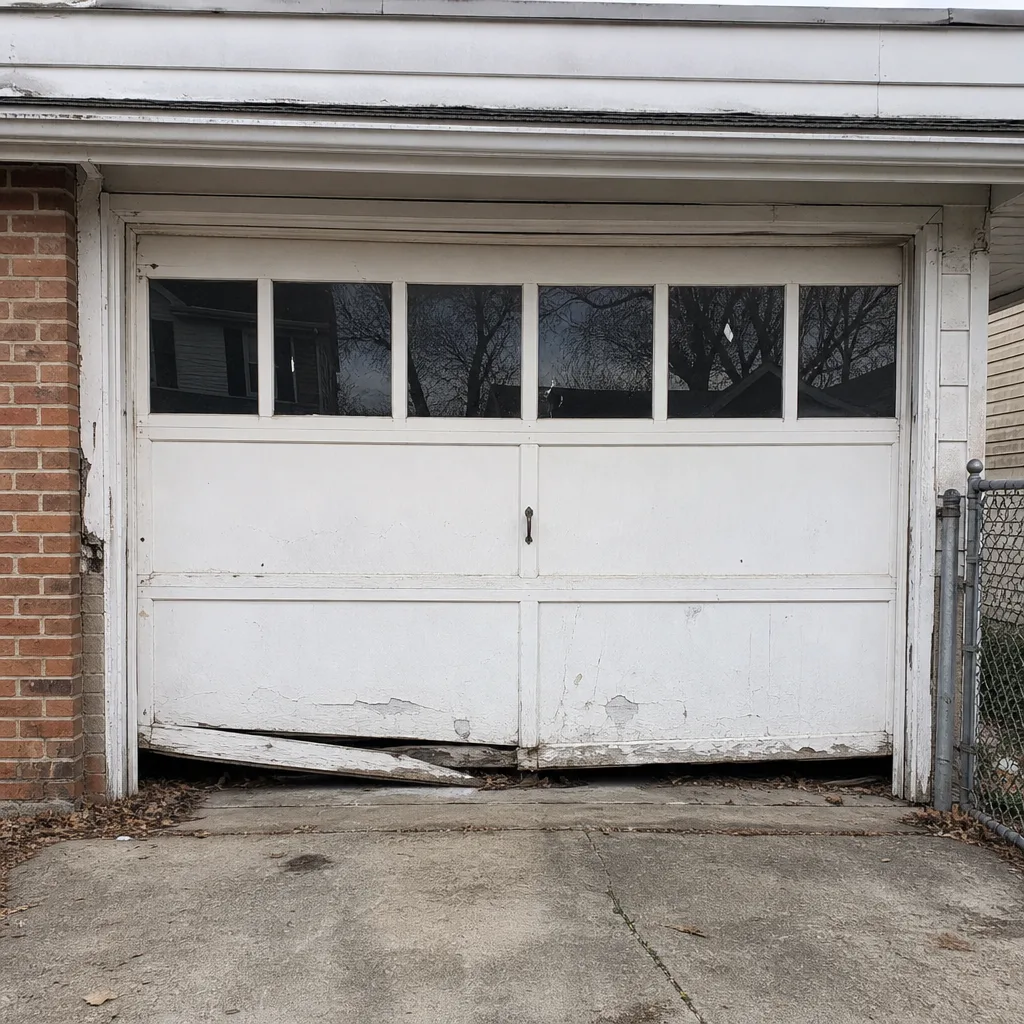 Before
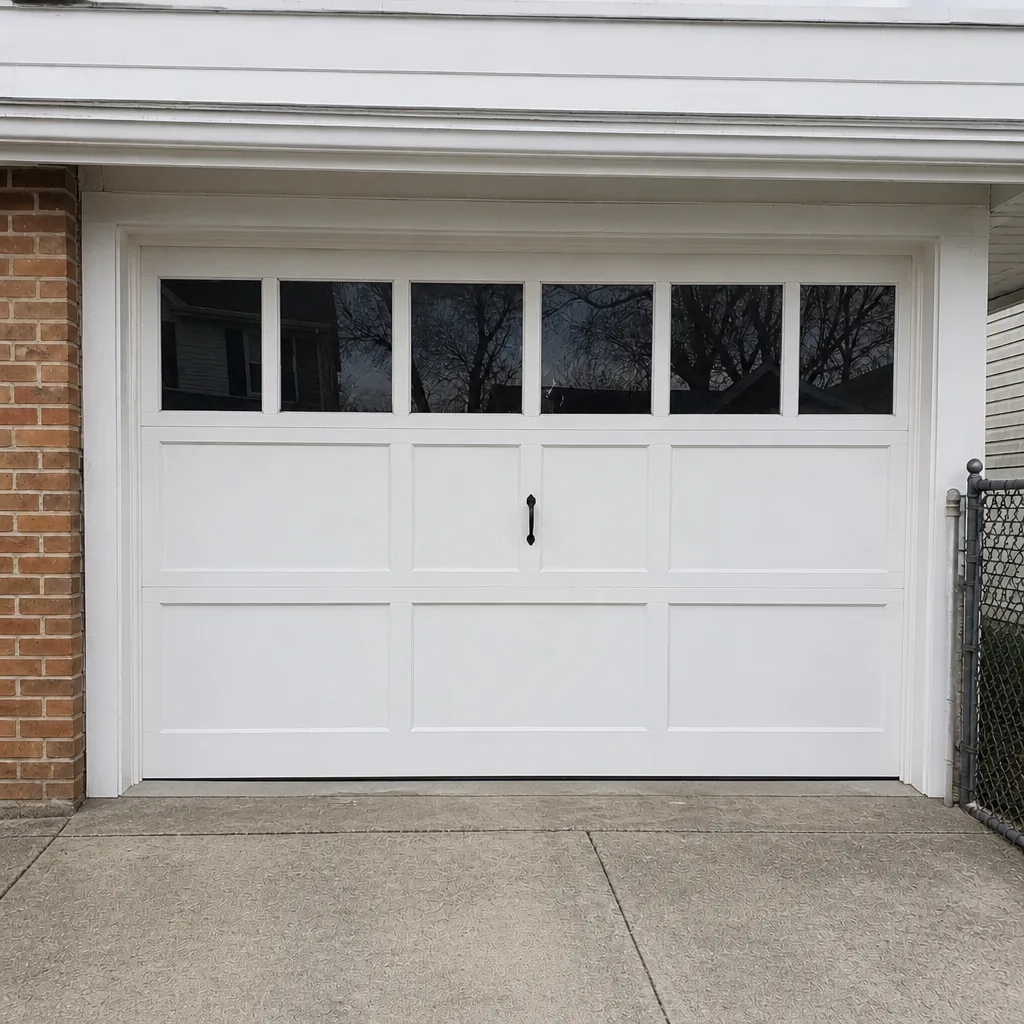 After
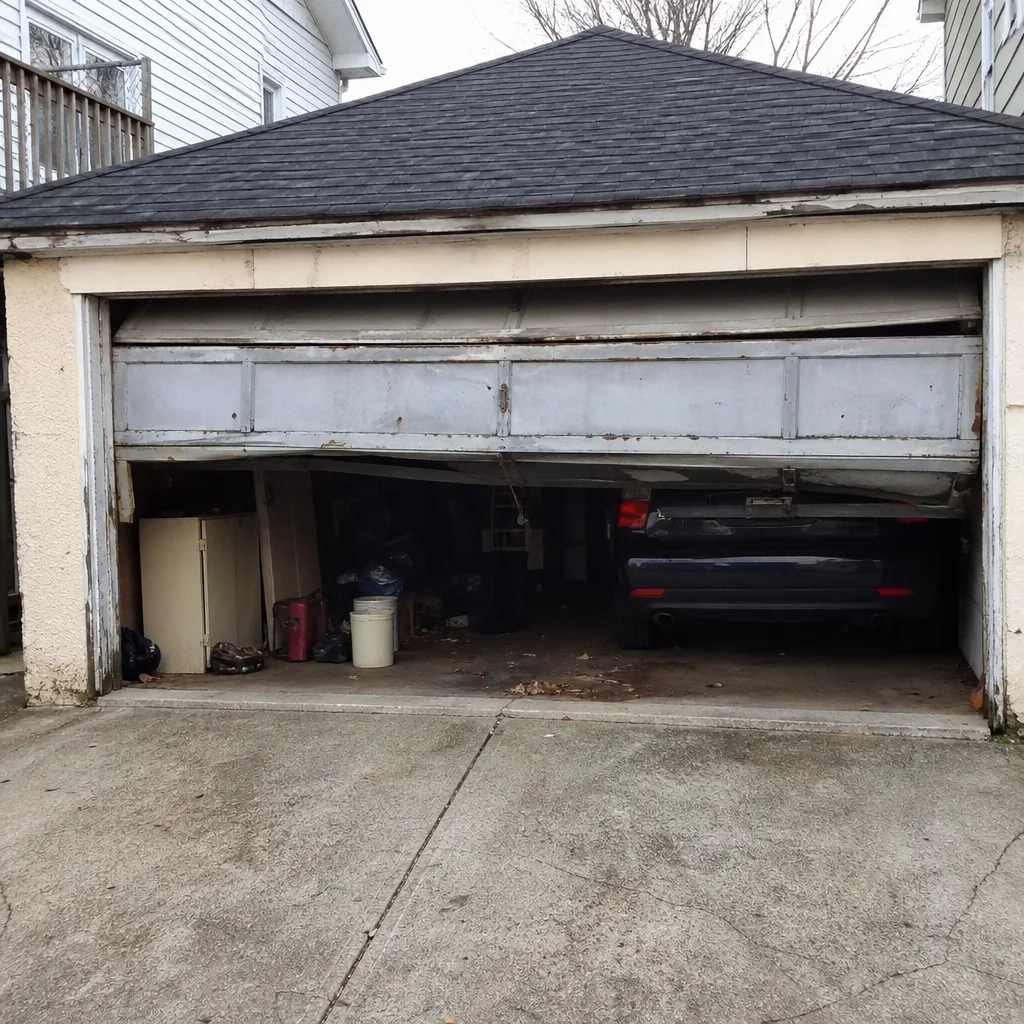 Before
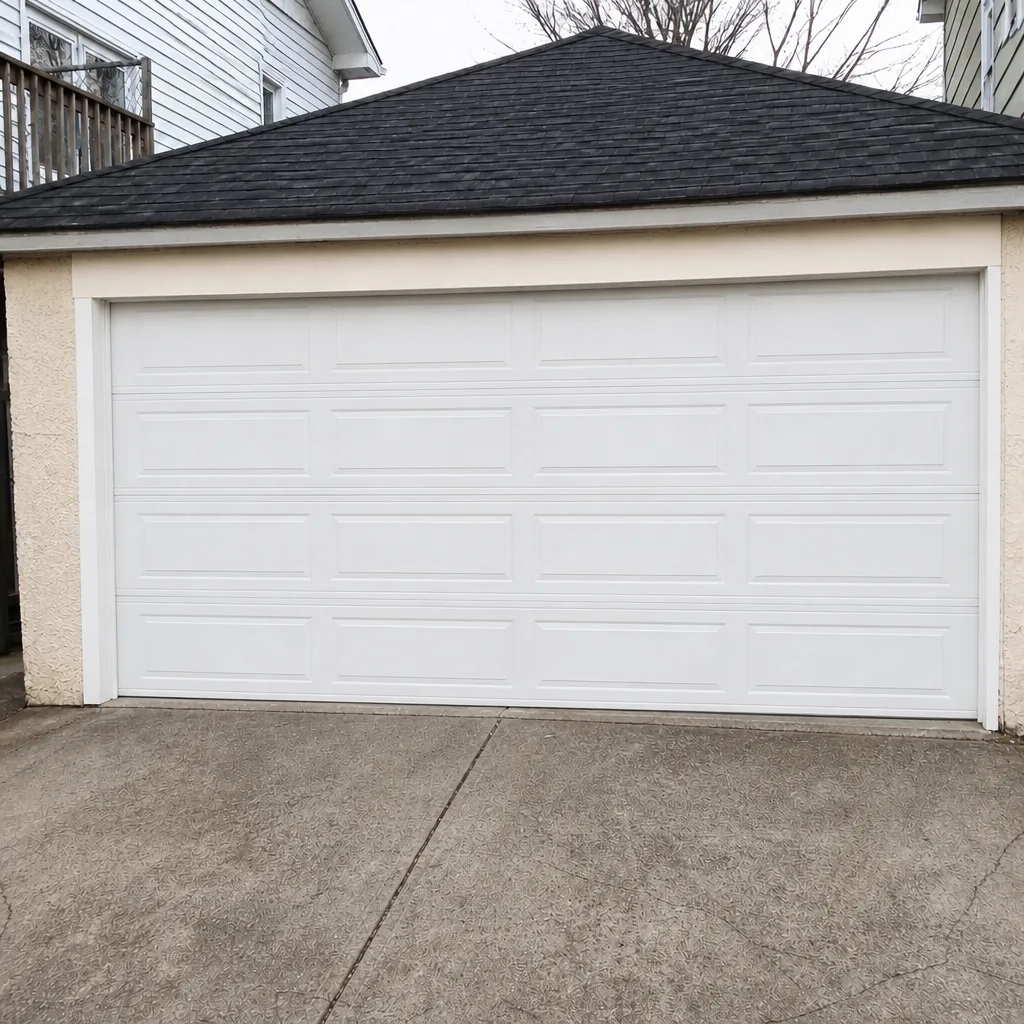 After
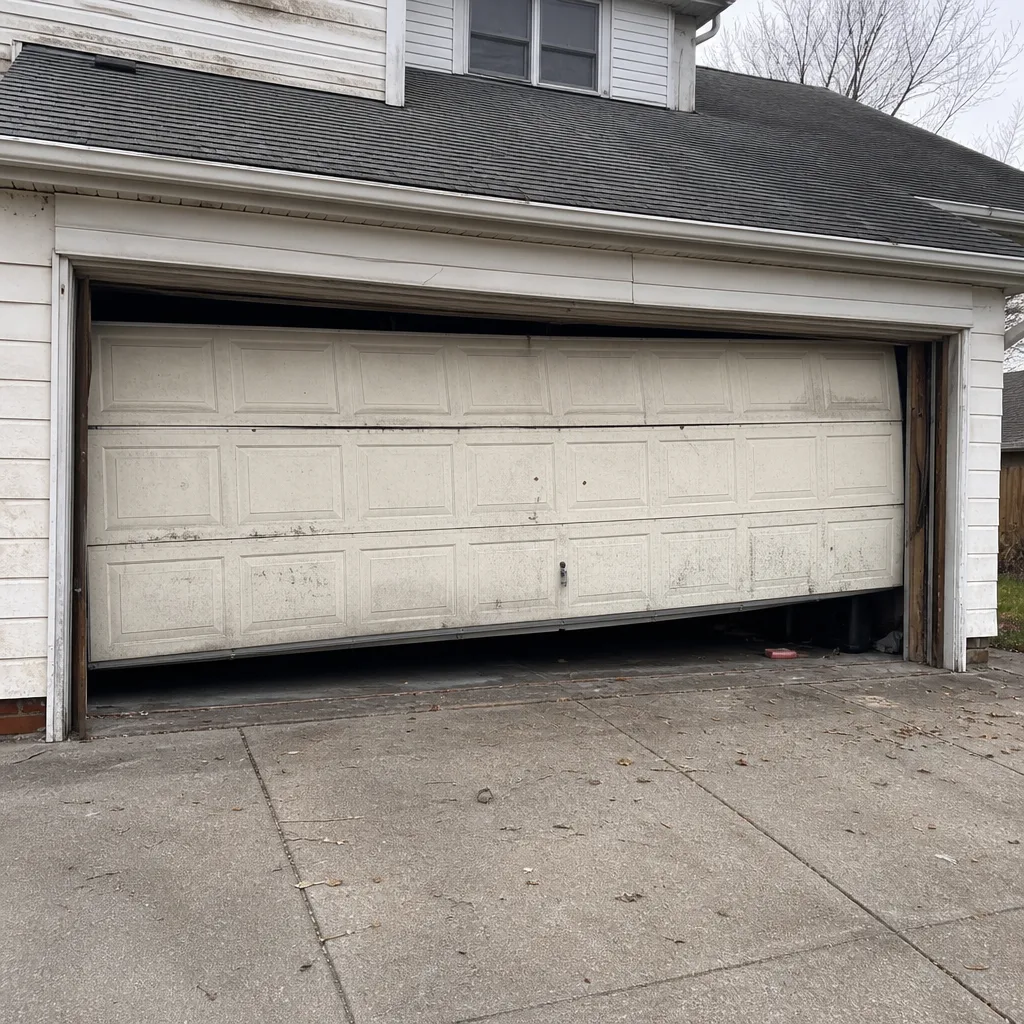 Before
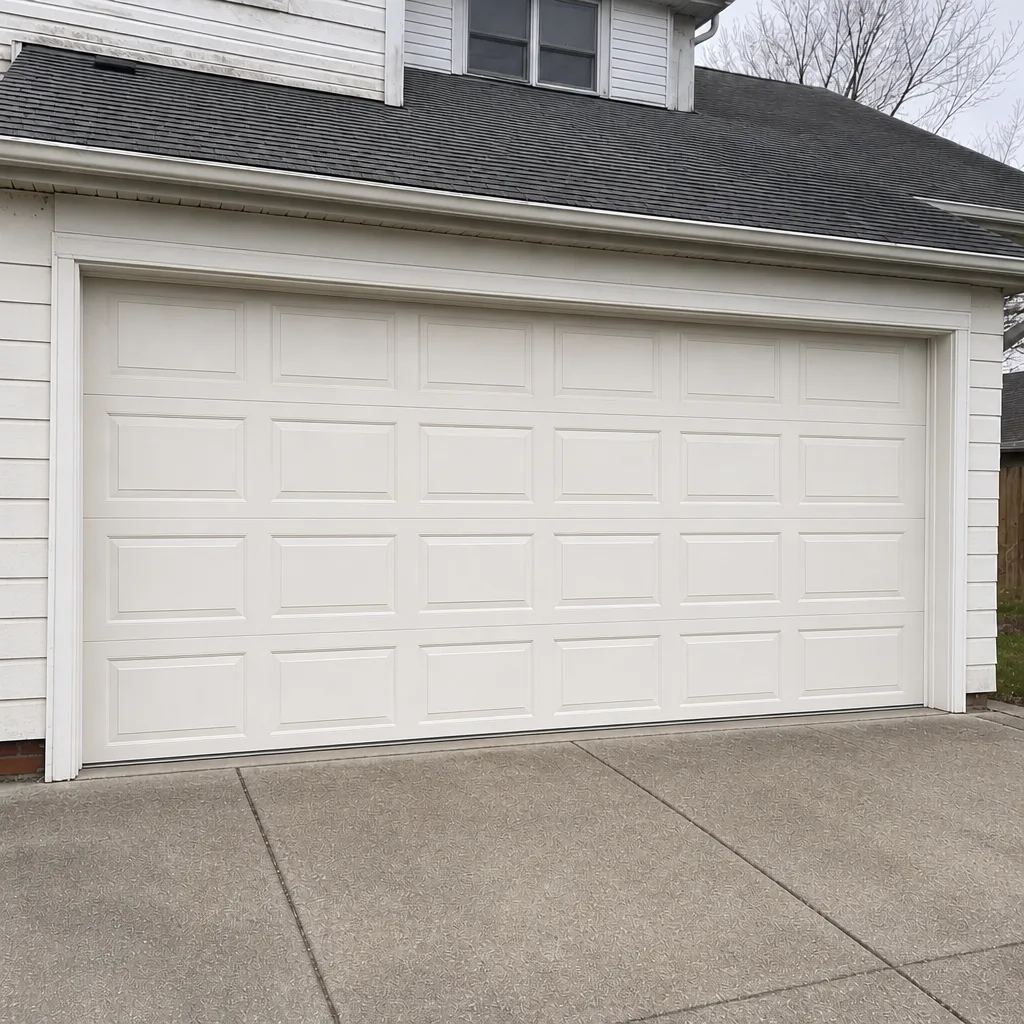 After
Common Mistakes to Avoid
- Waiting until the door quits. The warning signs in this guide exist so you can fix a small thing before it becomes a big one. A door that quits entirely is a stop-the-car, secure-the-house moment, not a gradual decline.
- Tightening a spring or cable yourself. Torsion and extension springs store enough energy to cause serious injury. The balance test is for you; the spring adjustment is not. Describe the symptom and let a technician handle the mechanism.
- Ignoring a slow door. Slower opening is often the first sign that the opener is compensating for a failing spring. Left alone, the opener motor is usually the next part to fail.
- Repeatedly resetting a reversing door. If the door reverses and you keep pressing the button, you’re cycling the door into its own safety system. Find out why it reverses rather than forcing it.
- Choosing a generalist over a garage door specialist. A handyman can probably fix a loose hinge. But a task that feels like a quick fix can turn into a bigger repair when the work isn’t done by someone who knows where the stress actually lives. Single-trade focus is why we can match a symptom to a part so quickly.
- Putting off a bent track. Track damage is easy to ignore when the door still opens. In Journal Square, where tight garages invite the occasional bump, a bent section left alone will wear the rollers that travel it.
- Not noting the behavior when something goes wrong. What the door did, when, and in what pattern is diagnostic. A short note or a phone video of a reversing door or a flashing opener is worth ten minutes of guessing.
When to Call a Professional
Call a specialist when you see any warning on the stop-use list: a frayed or broken cable, a pop followed by a door that hangs unevenly, a door off its track, or a door that reverses and won’t close. Call when the balance test drifts more than two inches. Call when the opener flashes a code you can’t match, or when a grinding or popping sound gets worse over a few cycles. And call when you’re simply unsure – describing a symptom over the phone is free and takes a minute, and it’s the fastest way to know whether the door is safe to keep using.
We work on both the mechanical door and the opener, so you don’t need to call two companies to get one door working again. We carry the diagnostic capability for the major brands and the parts knowledge that comes from focusing on garage doors alone. We answer 24/7. Fast dispatch from 7am to 7pm, Sunday through Friday. Garage Door Repair Journal Square offers free estimates in Journal Square – call (833) 968-6578.
Frequently Asked Questions
The earliest signs are usually a door that runs slower than it used to, a new squeal or grind during travel, and a door that doesn’t hold its position on the balance test. Any of these is a reason to schedule a visit before the problem turns into a broken spring or dead opener. If you notice a frayed cable or the door hanging crooked, stop using it and call (833) 968-6578.
A pop can mean the spring system is binding, losing tension, or starting to fail, and the spring carries the full weight of the door – so yes, treat it as a serious warning. A single pop with no other problem may warrant a scheduled look, but a loud pop followed by an uneven or stuck door means stop using the door and call a specialist. Do not attempt to adjust the spring yourself.
No. Garage door cables are under tension and hold the weight of the door, and a failed cable can drop the door unevenly. Fraying means the cable has already lost strength, and replacing or tensioning one is a job for a trained technician. Call (833) 968-6578 and we’ll take a look.
A door that drifts more than two inches is out of balance, which almost always means the springs are wearing or out of adjustment. The opener then has to lift part of a load it wasn’t built for, and that’s how opener motors burn out. A technician can check the springs and the balance together with a free estimate – call (833) 968-6578.
Most reversing doors are responding to the safety sensors – either an obstruction in the path or a misaligned photo-eye. Dust, a bumped sensor, or a spider web on the lens is a common trigger. If the sensors look clear and clean and the door still reverses, the safety system or its wiring needs a closer look, and we can trace it on a visit.
Yes – heavier daily use, tight garages that invite minor track and panel damage, and older hardware that’s cycled more than anyone can count. Northeast freeze-and-thaw also works at panel and frame connections, which is where hairline cracks tend to appear. Running the balance test a few times a year catches most of it early.
The Bottom Line
Garage door failures almost never happen without warning – they happen because nobody learns what normal looks like. A door’s sound, its speed, and its closing gap are your three baselines, and they’re free to check. Sort any warning into two piles: sounds and friction you can schedule, and spring, cable, or off-track problems you stop using the door for. Run the balance test occasionally, note any drift over two inches, and treat a reversing door or a flashing opener light as a message worth decoding. When something on the stop-use list shows up, a garage door specialist is the right call, and we’re the ones focusing on garage doors alone.
For a door that won’t move, sounds wrong, or is drifting out of balance, we handle it as a single specialist – opener, spring, panel, and installation, on the brands you already own. Same door, right fix. Call (833) 968-6578 for a free estimate. We answer 24/7. Fast dispatch from 7am to 7pm, Sunday through Friday. You can also start at Garage Door Repair Journal Square to see the services we provide.
Written by the team at Garage Door Repair Journal Square.