
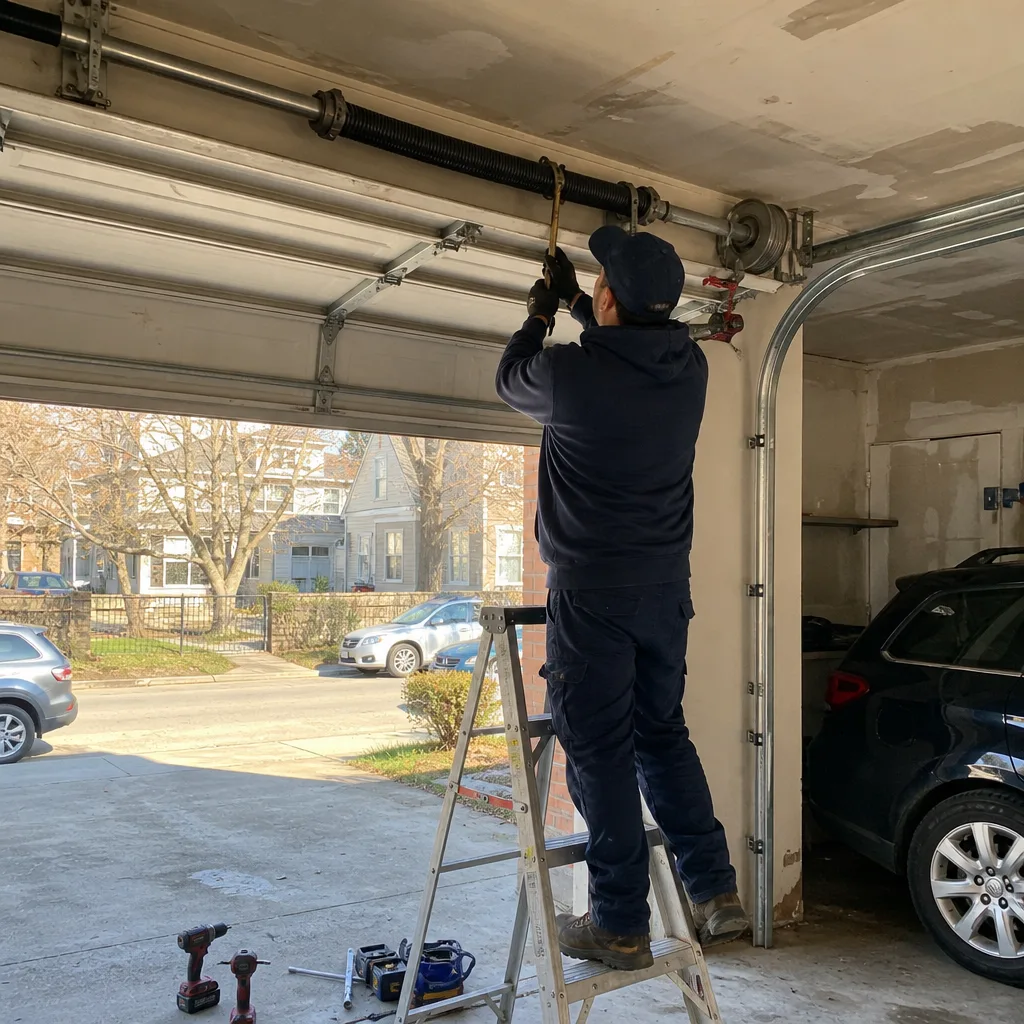
Last updated November 21, 2026
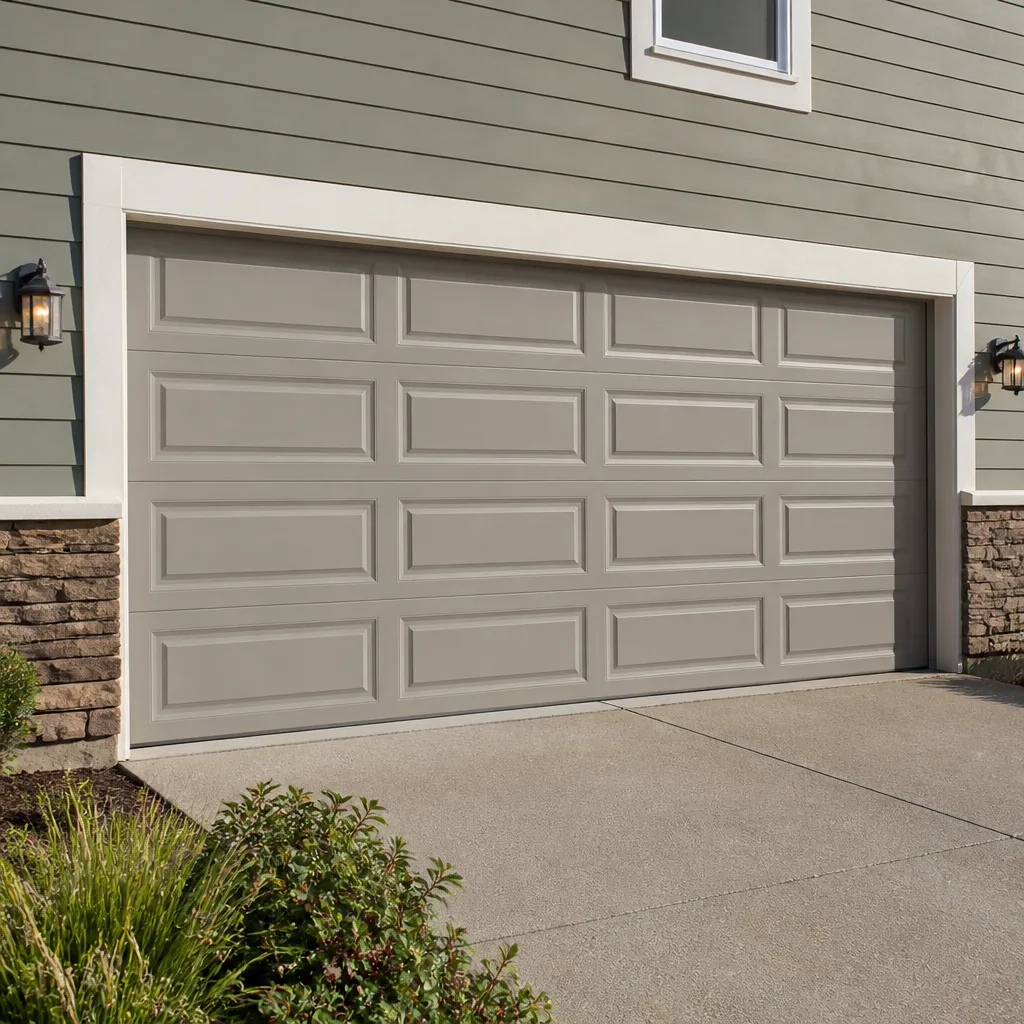 Raised-panel steel
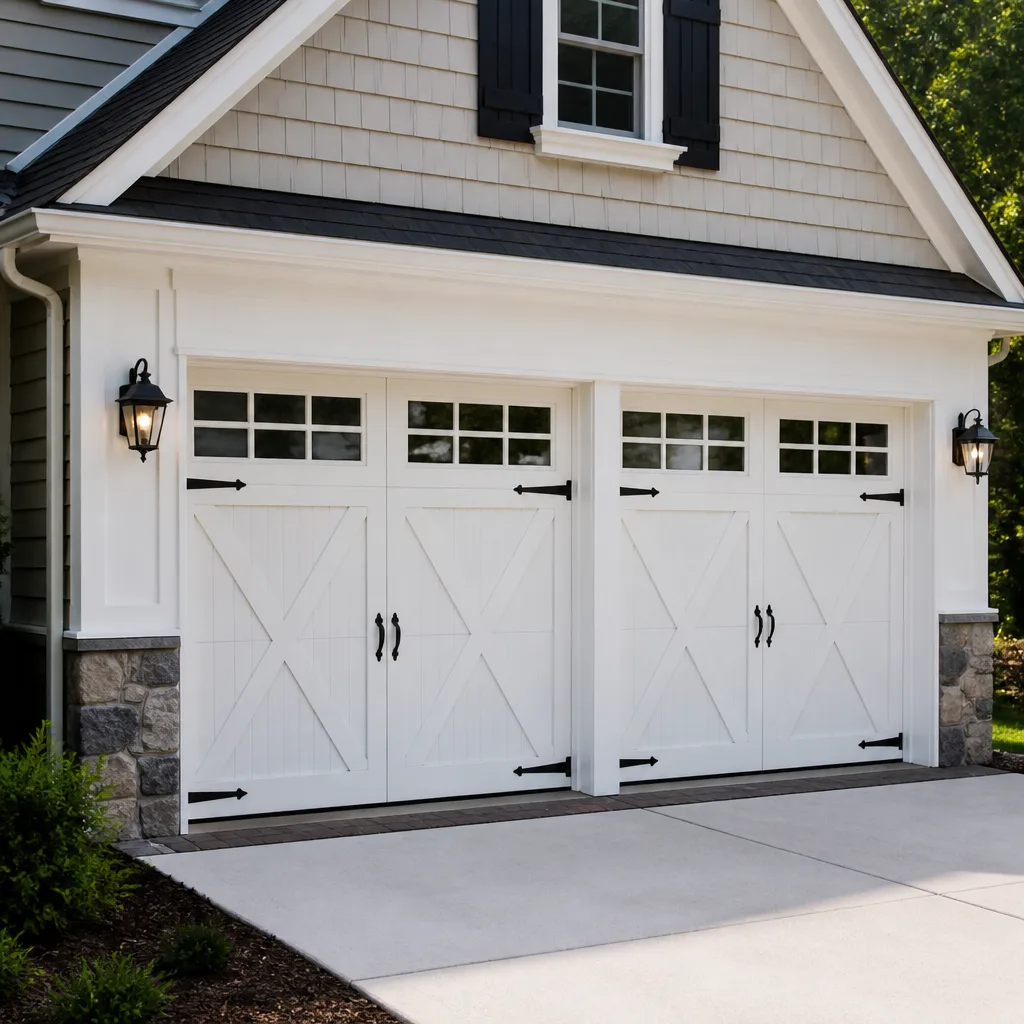 Carriage house
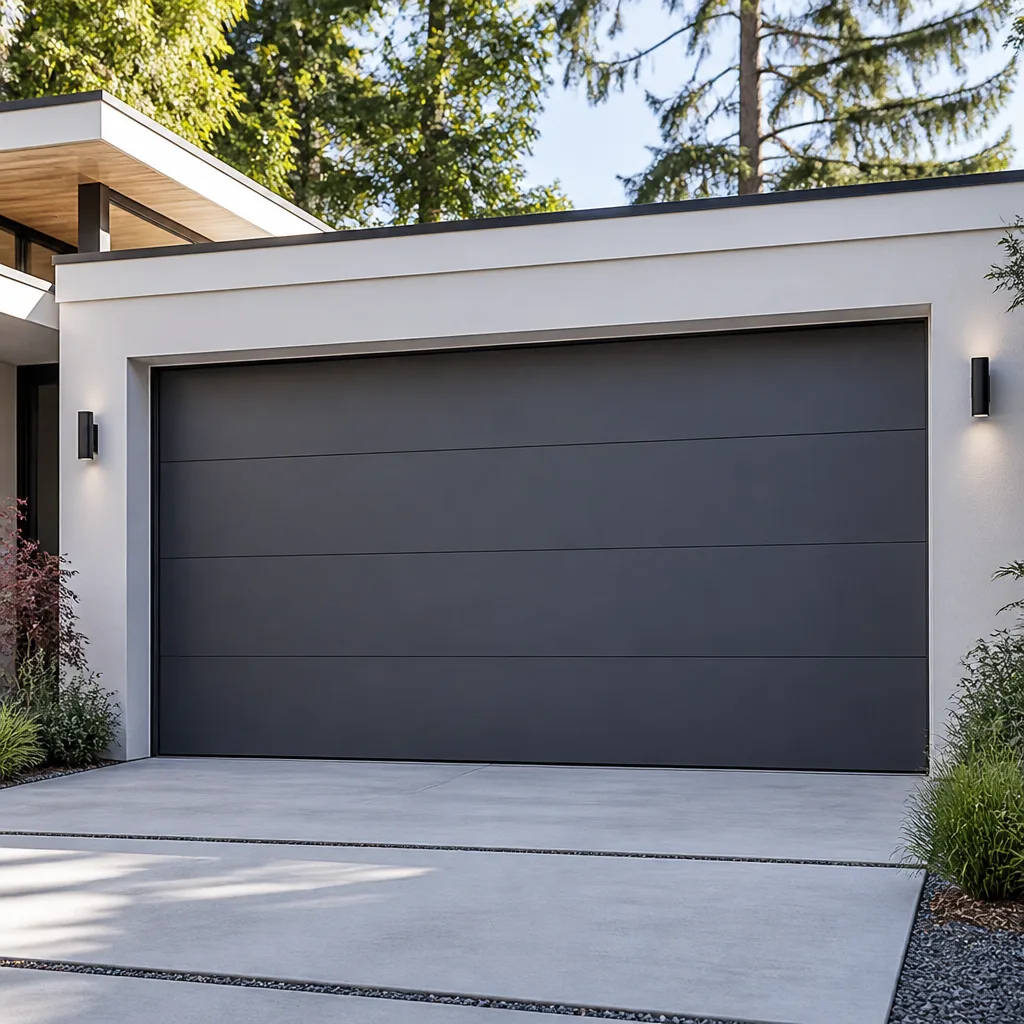 Modern flush
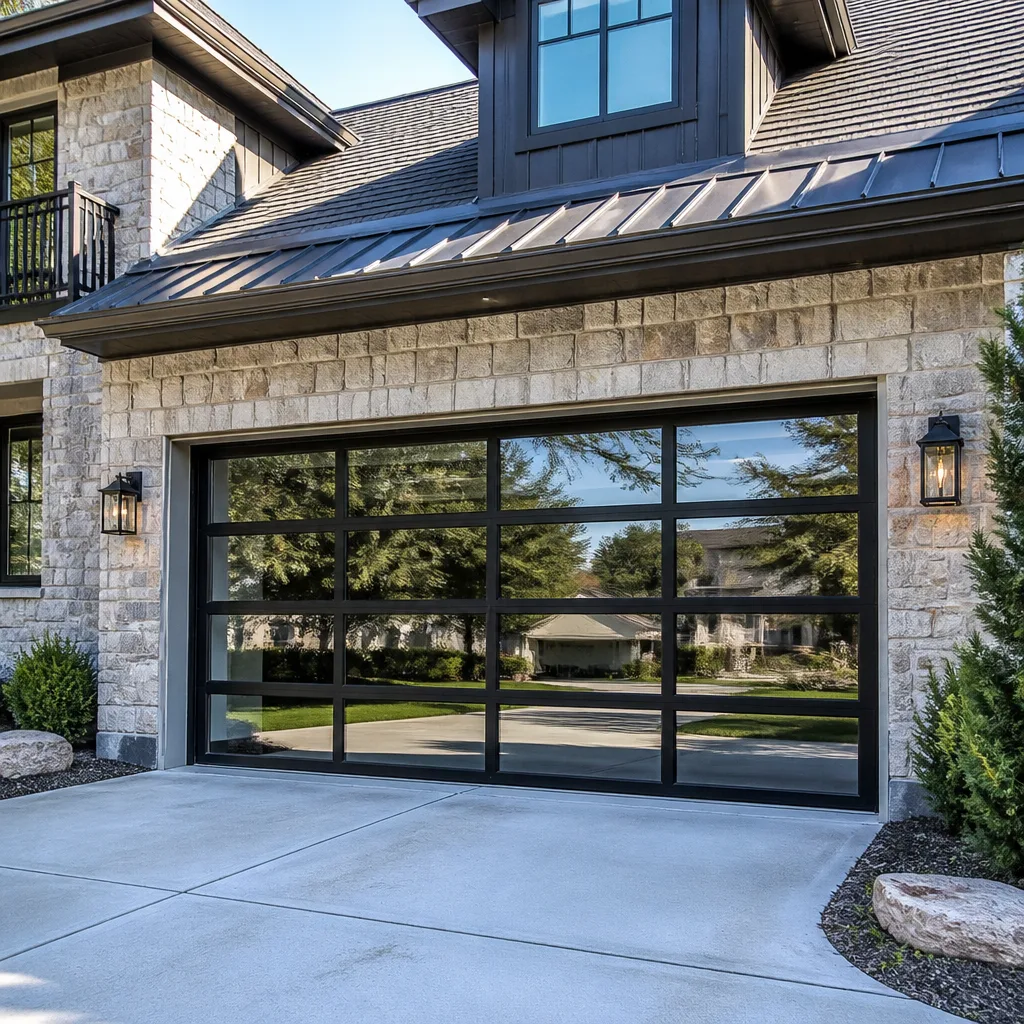 Full-view glass
 LiftMaster openers
 Chamberlain openers
Full 25-point door and opener safety check with every visit - springs, cables, rollers, tracks, and your LiftMaster or Chamberlain opener included
You get a price before we start. It does not change when the pro arrives.
Get your free estimateGarage Door Permits, Codes & Inspections in Journal Square, NJ: What You Need to Know
Most homeowners assume a garage door is a fixture, not a construction project, so the permit question never crosses their mind. That assumption holds up fine until a like-for-like swap turns into a structural or electrical change, or until a buyer’s inspector starts asking who signed off on the work. If a sale surfaces an unpermitted installation, the cost isn’t just paperwork; it can mean re-inspection or redoing the job at closing. This guide walks through when New Jersey’s Uniform Construction Code applies to garage door work in Journal Square, what Jersey City’s Division of Buildings looks for, and how UL 325 safety compliance fits into the inspection.
Quick Answer
A straight like-for-like garage door replacement in Journal Square usually does not need a permit, while structural changes (header work, track relocation, wall modifications) or new electrical work for an opener typically do. The dividing line runs through New Jersey’s Uniform Construction Code, and Jersey City’s Division of Buildings makes the final call on your specific job. Get the requirement in writing before any work begins, because an unpermitted job can stall a sale or a certificate of occupancy years later.
Styles & brands we work with
- Raised-panel steel
- Carriage house
- Modern flush
- Full-view glass
- LiftMaster openers
- Chamberlain openers
Table of Contents
- What Triggers a Permit Under New Jersey’s Uniform Construction Code
- What Jersey City’s Division of Buildings Requires
- UL 325 Safety Standards and Code Compliance
- The Practical Risk of Skipping Permits in Hudson County
- How to Apply for a Garage Door Permit in Journal Square
- Realistic Timeline and Inspection Expectations
- Common Mistakes to Avoid
- When to Call a Professional
What Triggers a Permit Under New Jersey’s Uniform Construction Code
The Uniform Construction Code (UCC) is the statewide framework New Jersey uses to regulate building work, and it draws a line between routine maintenance and construction. Swapping a door for one of the same size, same track configuration, and same mounting points generally counts as maintenance. Changing the structure around the door, the framing, or the electrical circuit feeding the opener generally counts as construction. That distinction is the whole game, and it’s the part most homeowners never hear.
In our experience across Journal Square, the jobs that most often cross the threshold are the ones where ambition outruns the original opening. A homeowner wants a wider door, or wants the tracks moved to accommodate a car lift, or wants the opener wired to a new circuit in the panel. Each of these is a different permit conversation.
Here’s how the threshold usually breaks down:
- Like-for-like replacement: Same size, same style, same track layout, no framing changes. Usually no permit needed. This is the most common garage door job in Journal Square row houses and small multi-family buildings.
- Header or framing modification: Enlarging the opening, adding a beam, or altering the wall above the door is structural work. Permit almost always required.
- Track relocation or new mounting: Moving the vertical or horizontal tracks to a new position touches the structure and typically requires review.
- New electrical circuit for an opener: Running a new dedicated circuit from the panel is electrical work under the UCC electrical subcode. Permit required.
- Replacing an opener on an existing circuit: Swapping a unit on a live, existing outlet is generally not a permit item, but confirm with the Division of Buildings.
- Wall-mounted jackshaft opener installation: Often sits between mechanical and electrical depending on whether new wiring is run.
The one rule to hold onto: the permit decision is made by the code official, not by your contractor and not by a forum thread. Ask the Division of Buildings before the door is ordered. A quick call to Garage Door Repair Journal Square can help you read the job accurately before you commit to a scope.
What Jersey City’s Division of Buildings Requires
Jersey City’s Division of Buildings administers the UCC locally, which means your permit application for a garage door job in Journal Square goes through the city, not Trenton. The division sorts work into subcodes: building, electrical, plumbing, and fire. Garage door work usually touches one or two of them, and knowing which is the difference between a smooth application and a bounced one.
Mechanical-only replacement of a door, spring, track, or hardware falls under the building subcode. If the job is a true like-for-like swap, the division may tell you no permit is needed at all, and that answer is worth getting in writing. Electrical work for a new opener circuit falls under the electrical subcode, and that’s the application most homeowners miss. If the electrician runs a new line from the panel, that line needs its own electrical permit even if the door itself doesn’t need one.
In our experience with Journal Square buildings, the electrical question trips people up most often in older two- and three-family homes where the garage circuit is shared or undersized. A new opener on a tired circuit is a real risk, and the Division of Buildings is not wrong to want eyes on it. If you’re unsure whether your opener install crosses into electrical permit territory, the technicians on a garage door opener repair call can tell you what’s on the wall and what would need to change.
What to have ready when you contact the Division of Buildings:
- Property address and block/lot number
- Description of the proposed work (door size, opener model, whether new wiring is involved)
- Contractor name and license information, if a contractor is performing the work
- Any manufacturer spec sheets for a new door or opener
- Photos of the existing opening and the electrical panel if new wiring is planned
A 15-minute call to the division before any door is ordered saves weeks of backtracking. Journal Square is a dense, older neighborhood, and the city knows its building stock well.
UL 325 Safety Standards and Code Compliance
UL 325 is the safety standard for garage door operators, and it’s the benchmark inspectors use when they test an automatic door. The standard covers entrapment protection, and the practical core of it is the auto-reverse system: the door must reverse when it meets an obstruction, and the opener must have at least one means of entrapment protection that works without a human in the loop. Photoelectric eyes and edge sensors are the two most common forms. A unit that relies only on the pressure of the door against an object, with no photo eye or edge sensor, does not meet current expectations.
Here’s what a compliant auto-reverse system looks like and how inspectors test it:
- Photo eyes present and aligned: Two small sensors mounted about six inches above the floor, one on each side of the opening, with the beam unbroken. Inspectors wave a hand through the beam mid-travel and watch for reversal.
- Reversal within the specified travel: The door must stop and reverse when the beam is broken during the closing cycle, not just at the bottom.
- Pressure sensitivity check: A test object is placed in the door’s path, and the door must reverse on contact without excessive force.
- Manual release functional: The emergency release cord must work, and the door must be operable by hand once disengaged.
- Warning label present: The required entrapment warning label is mounted where it can be seen by someone operating the door.
- Wall control out of reach of small children: The wall-mounted button is positioned so a child cannot easily reach it.
Older openers from any brand can fail these checks as photo eyes age, mounts loosen, or lenses cloud. When we look at a Journal Square opener on a service call, we test these same points before recommending a repair or a replacement, and we carry parts for the major units including Chamberlain, Genie, and LiftMaster. If your opener is a Craftsman or a Wayne Dalton unit, the compliance checklist is the same.
One safety note that matters here: springs, cables, and the torsion assembly are under high tension and can cause serious injury. Do not attempt to adjust, remove, or re-tension a spring yourself. Compliance testing is done with the door closed and disengaged, and spring work belongs to a trained technician.
The Practical Risk of Skipping Permits in Hudson County
Permits feel like friction while the job is happening. They feel very different when a title search surfaces an open permit or an unpermitted change during a Hudson County sale. New Jersey’s title and municipal-lien process includes a municipal search for open permits, and a buyer’s attorney will typically require a certificate of occupancy (CO) for the property before closing. An unpermitted garage door installation can show up as an open item on that search, and the fix is on the seller’s side of the closing table.
Hudson County is also a market where older housing stock and recent renovation activity collide. Journal Square and the surrounding blocks have a lot of two- and three-family homes where a garage was added or modified at some point, often decades ago and often without documentation. When a buyer’s inspector flags a door installation that doesn’t match the file, the seller is the one who has to make the file match reality, and that usually means bringing the work into compliance, not just explaining it.
The practical fallout of an unpermitted job in this market:
- Delayed closing: A title search that finds an open permit or an undocumented change can push a closing date while the seller resolves it.
- CO problems: A certificate of occupancy is a routine closing requirement, and an unpermitted structural change can complicate it.
- Re-inspection costs: Bringing a job into compliance may mean an inspection, corrections, and a re-inspection, all paid by whoever owns the property at that point.
- Buyer leverage: A flagged issue is a negotiating tool, and sellers often absorb the cost as a credit.
- Insurance questions: An unpermitted structural change may raise questions with a homeowner’s insurer if a claim involves the door or the wall it’s mounted in.
None of this is meant to scare anyone off a garage door job in Journal Square. It’s meant to make the permit question a 10-minute conversation before the work starts instead of a 10-week one at closing. The Department of Buildings in Jersey City is the authority to call, and the answer they give is the one that travels with the property.
How to Apply for a Garage Door Permit in Journal Square
Applying for a garage door permit in Jersey City runs through the Division of Buildings, and the process is more straightforward than most homeowners expect, provided the paperwork is right. The application is filed by the licensed contractor performing the work, or by the homeowner if they’re doing it themselves and their municipality allows it. For most Journal Square jobs, the contractor pulls the permit.
The steps, in order:
- Confirm the permit requirement. Call the Division of Buildings with the address and a plain-English description of the work. Ask specifically whether a building subcode permit, an electrical subcode permit, or both are needed.
- Assemble the documents. Property address and block/lot, contractor license information, plans or spec sheets if structural work is involved, and a description of the electrical scope if a new circuit is being run.
- Submit the application. The licensed contractor files with the Division of Buildings and pays the permit fee. Ask for the permit number and the inspection contact.
- Schedule the inspection. Once the work is complete, the contractor schedules the inspection. The code official checks structural attachment, electrical work, and UL 325 compliance points.
- Keep the paperwork. The signed inspection card and permit record are part of your home file. They’re what a future buyer’s attorney will look for during a title search.
In our experience, a full replacement of a door using Clopay or Amarr units on an existing opening is a like-for-like job that usually does not require a building permit. The scope that changes the answer is always structural or electrical. If you’re weighing a new door and want a straight read on the scope before you call the city, garage door installation is where we start, and the scope conversation comes before the door is ordered.
Realistic Timeline and Inspection Expectations
Timelines for a garage door permit in Jersey City depend on the subcode and the completeness of the application. A like-for-like replacement that does not need a permit is scheduled by the contractor and finished in a day. An application for structural or electrical work goes through the Division of Buildings’ review queue, which varies with the city’s workload. Realistic expectations are measured in weeks, not days, for the permit itself, and inspections are typically scheduled after the work is done.
What to expect at inspection:
- Building subcode inspection: Checks the door mounting, the framing, the tracks, and the overall attachment to the structure. Structural changes get the closest look.
- Electrical subcode inspection: Checks the new circuit, the outlet, the grounding, and the connection to the opener.
- Safety compliance: The inspector walks the UL 325 checklist, including the photo eye test, the pressure reverse test, and the manual release.
- Re-inspection: If anything fails, the contractor corrects it and the inspector returns. Each re-inspection is a scheduling event, so first-pass accuracy matters.
The single biggest variable in the inspection timeline is whether the door and opener are installed to spec and wired correctly the first time. A job done right passes on the first visit. When we handle a garage door repair or replacement in Journal Square, we build the compliance check into the final walkthrough so nothing on the inspector’s list is a surprise.
For an inspection that involves a full door replacement, we work through the schedule with the homeowner, not against it. Fast dispatch from 7am to 7pm Sunday through Friday handles the service calls, and installation work is measured and scheduled around the permit timeline.
Common Mistakes to Avoid
- Assuming every garage door job needs a permit. A like-for-like replacement usually doesn’t. Over-permitting is as much a waste of time as under-permitting, and both start with not calling the Division of Buildings.
- Assuming no garage door job ever needs one. The flip side. Structural changes and new electrical circuits for an opener are the usual triggers, and skipping that call can surface years later during a Hudson County sale.
- Missing the electrical subcode on a new opener circuit. The door isn’t the permit item; the new line from the panel is. In older Journal Square multi-family buildings, this is the most common gap.
- Using an opener that fails UL 325 in current form. A unit without working photo eyes or edge sensors can fail inspection, and the correction cost usually exceeds the price of the right unit.
- Not keeping the permit and inspection records. A signed inspection card in your home file is the difference between a smooth closing and a title-search surprise in this market.
- Treating the contractor’s opinion as the code official’s opinion. The Division of Buildings makes the call, not the contractor. Get the answer from the city and keep the record.
- Attempting spring or torsion work yourself to avoid the schedule. Springs are under high tension and can cause serious injury. This is not a permit issue; it’s a safety line.
When to Call a Professional
Call a garage door specialist when the work involves springs, cables, torsion assemblies, track realignment, or any structural change to the opening, and call before you order a door so the scope and permit question are settled first. Call when an opener needs a new electrical circuit, because that crosses into the electrical subcode and needs a licensed electrician in addition to the door work. Call when a door is off its track, when a panel is damaged, or when a sale is approaching and the permit file needs to be clean.
Garage Door Repair Journal Square is a single-trade specialist working on LiftMaster, Chamberlain, Genie, Clopay, Amarr, Wayne Dalton, Craftsman, and Raynor equipment, with technicians who have up to 8 years of experience. Estimates are free, and we quote and agree the price before any work starts. Call (833) 968-6578. We answer 24/7. Fast dispatch from 7am to 7pm, Sunday through Friday.
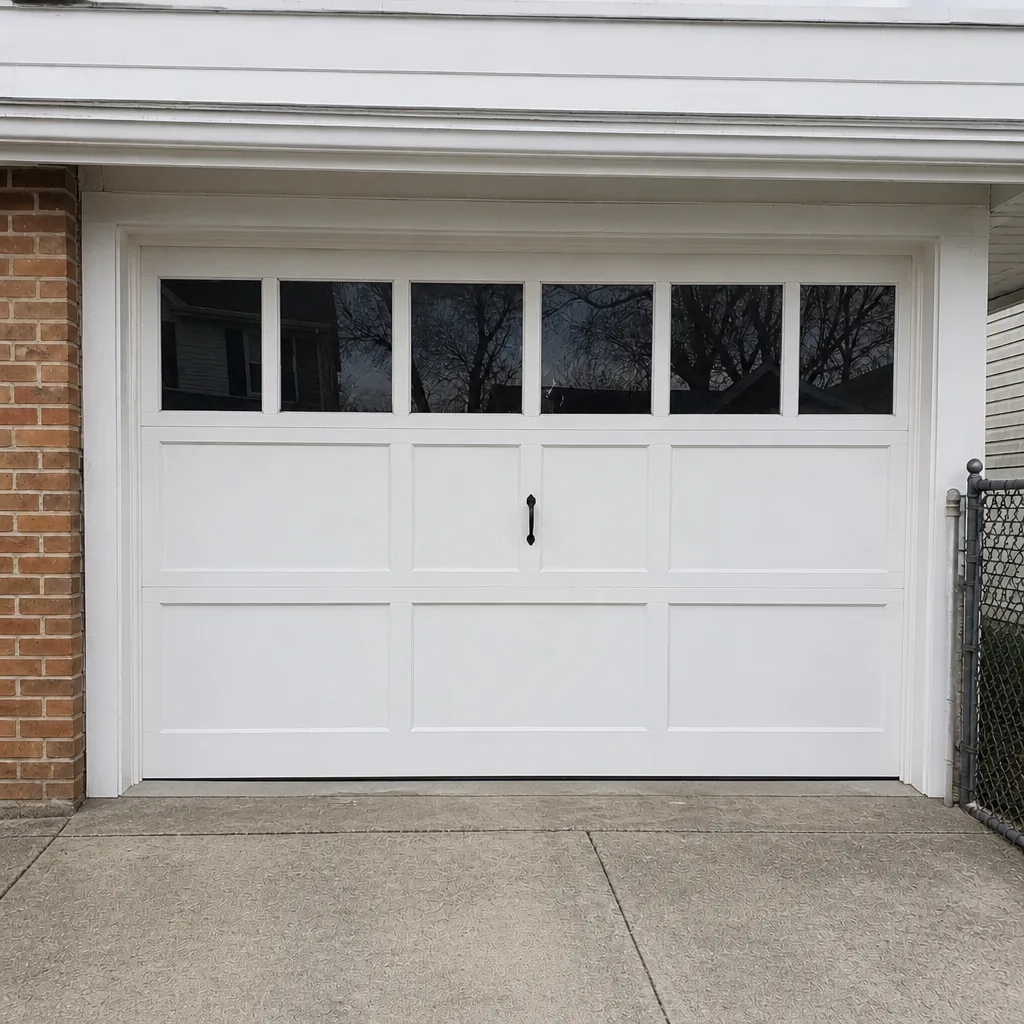
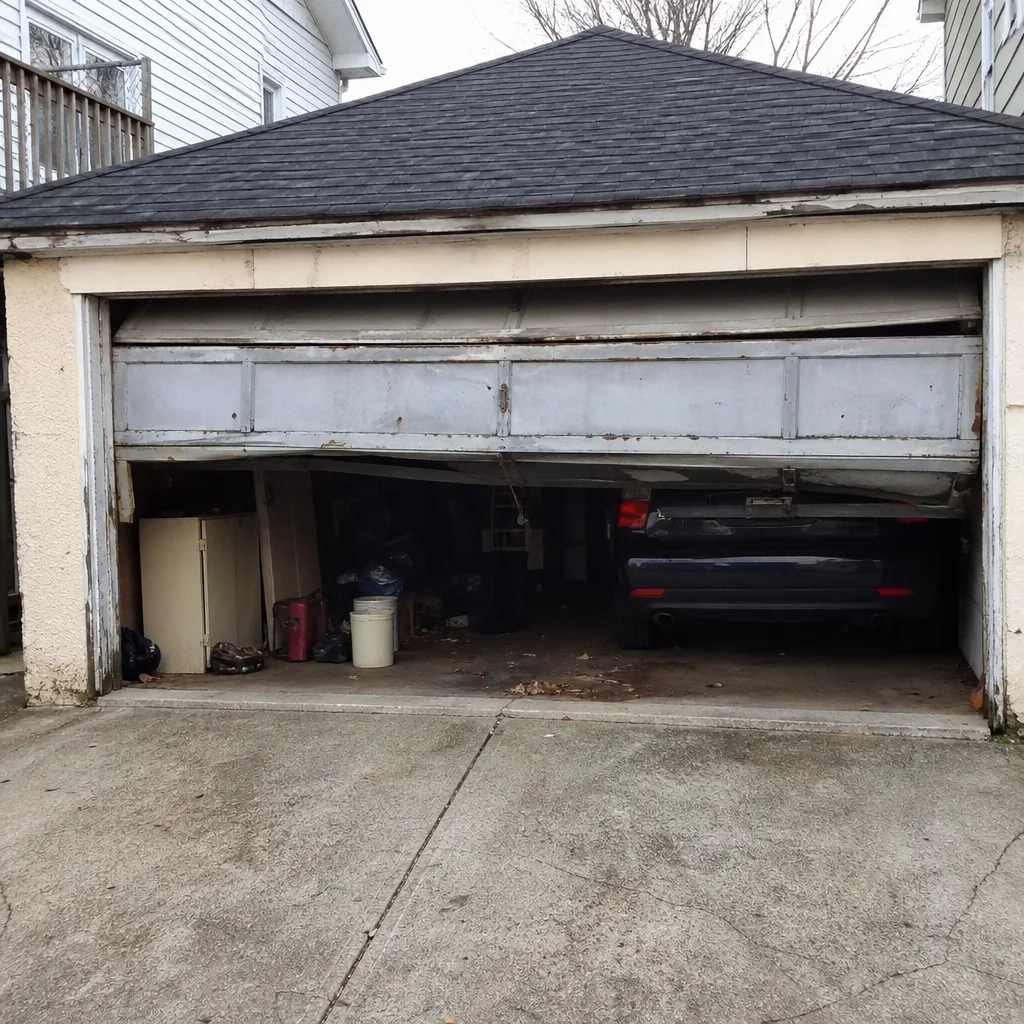
See the difference
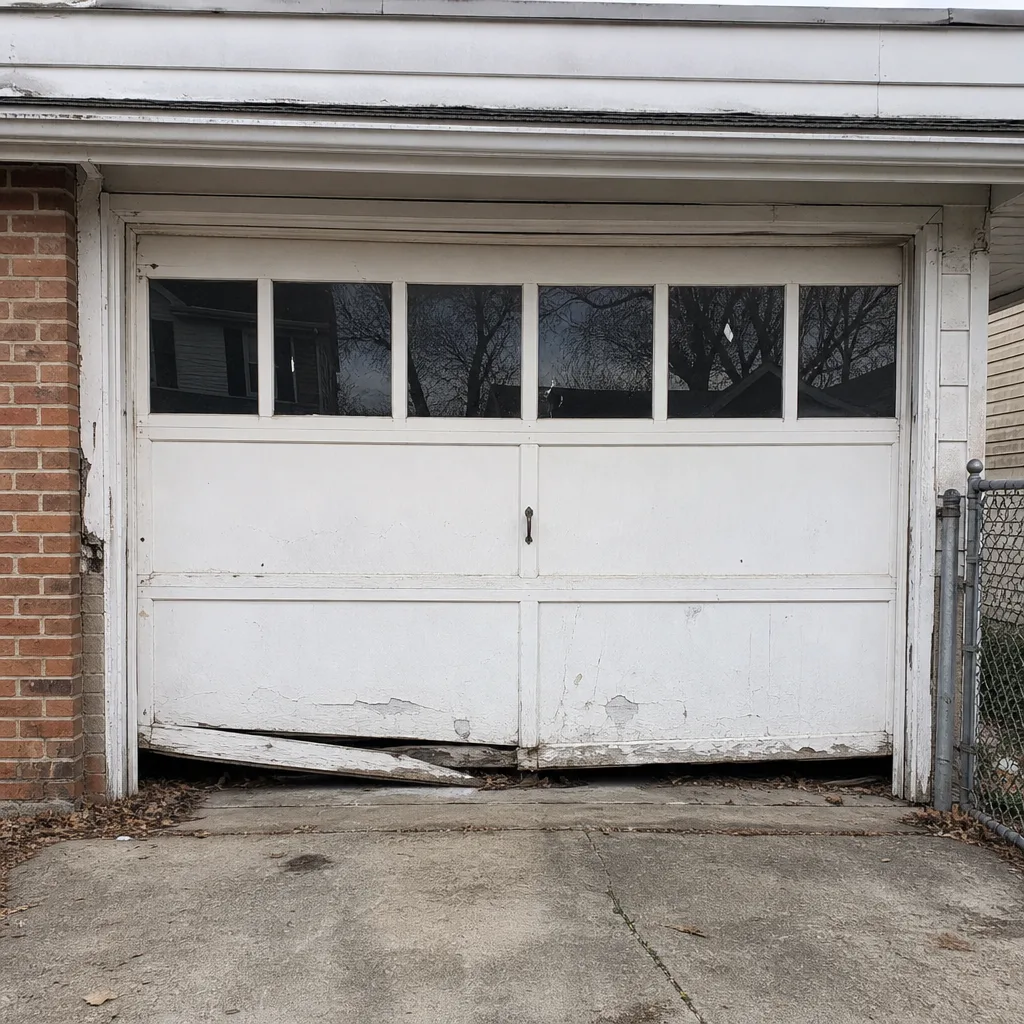 Before
 After
 Before
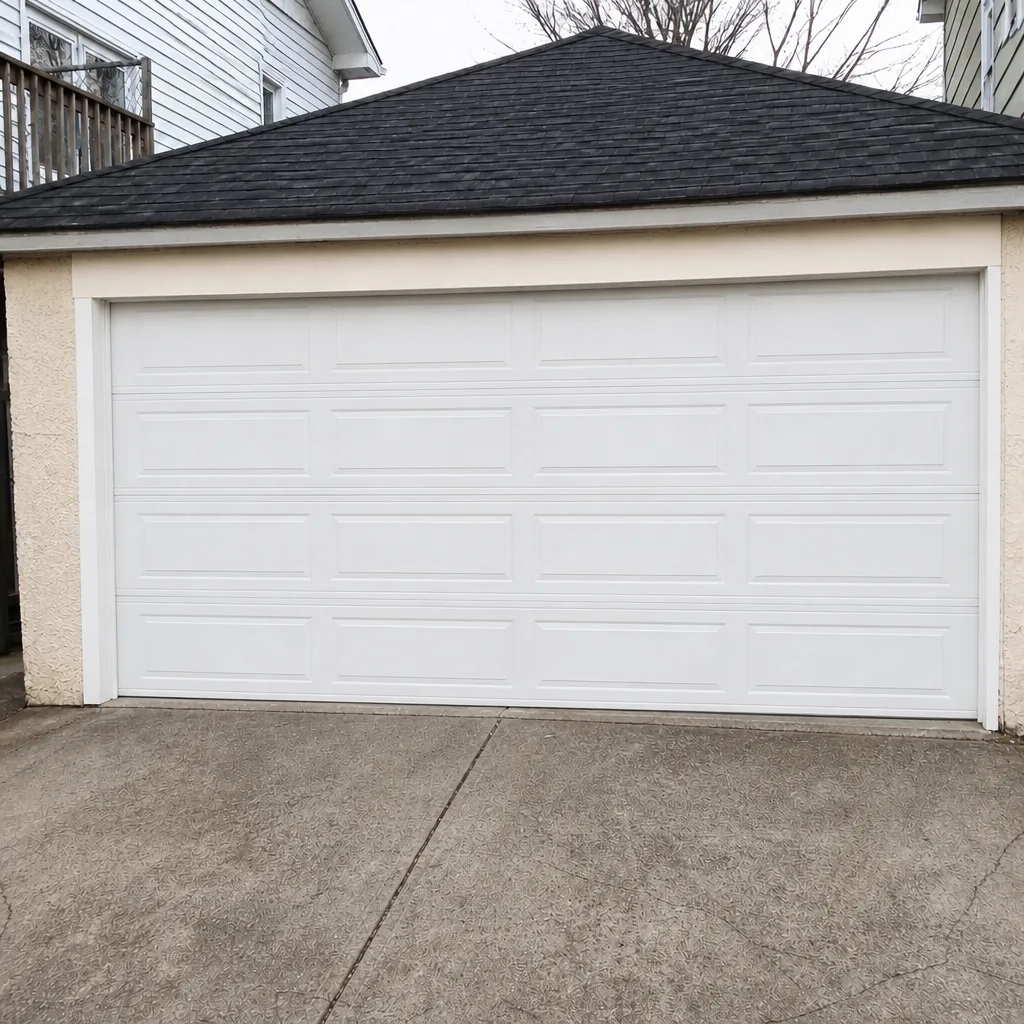 After
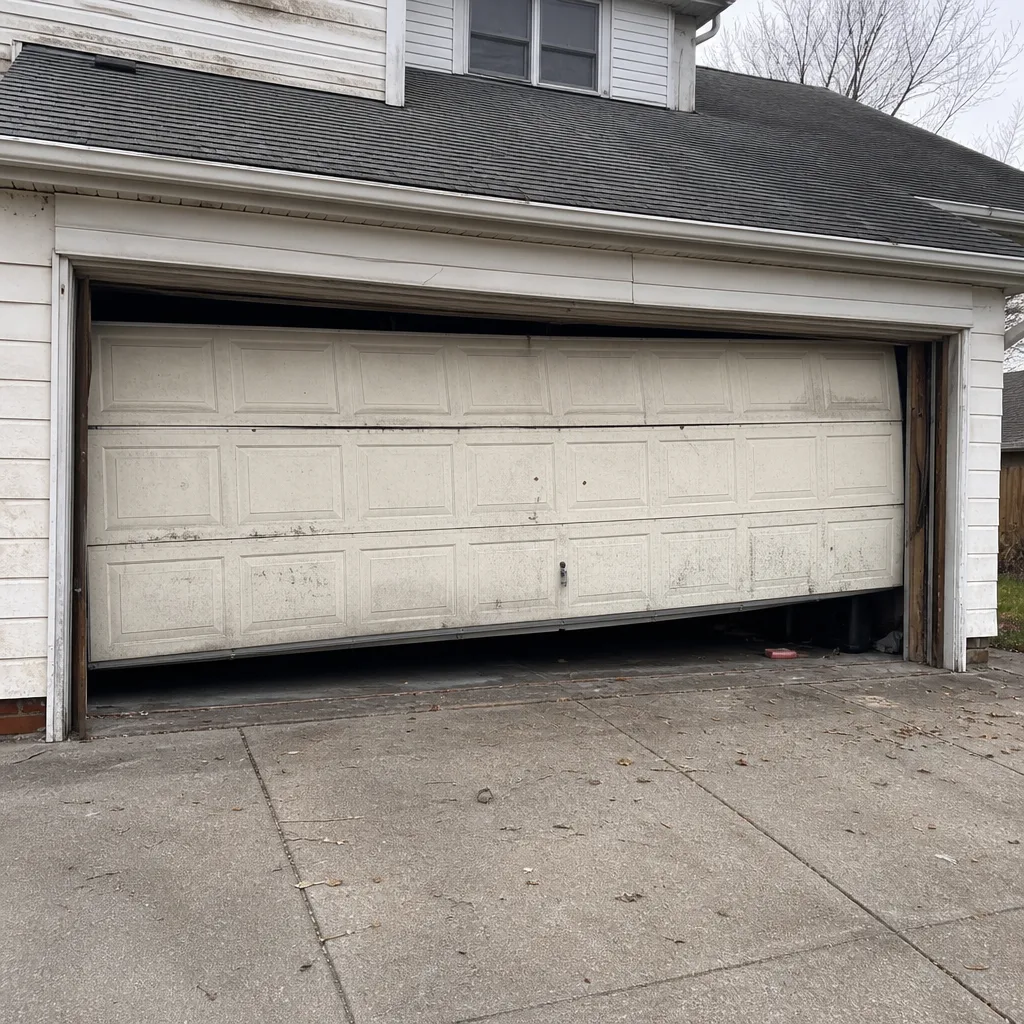 Before
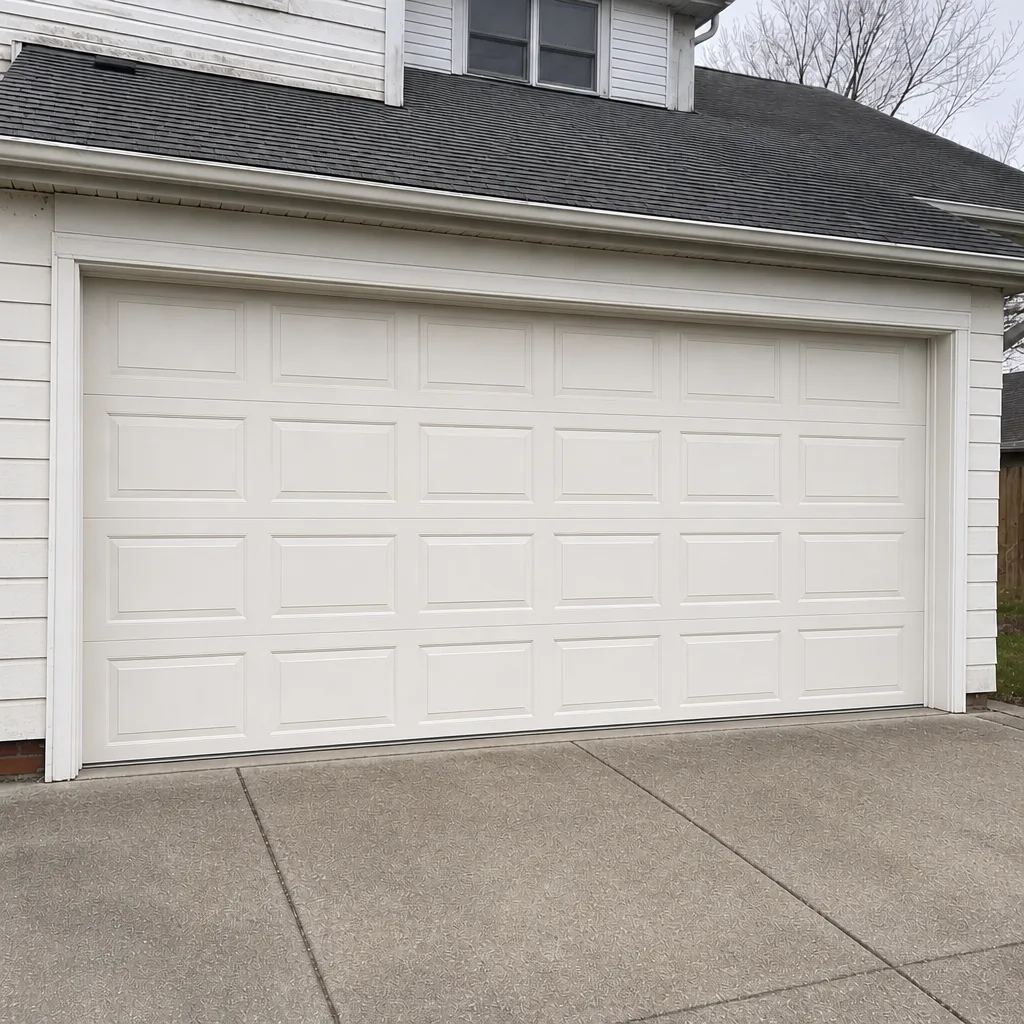 After
Frequently Asked Questions
Not usually, if the replacement is like-for-like: same size, same track layout, same mounting points, no framing changes. A structural change to the opening, a track relocation, or a new electrical circuit for an opener typically does require a permit under New Jersey’s Uniform Construction Code. Call Jersey City’s Division of Buildings with your address and the scope to get the answer that applies to your property. Call (833) 968-6578 for a free estimate on the door work itself.
Only if a new circuit is being run from the electrical panel. Replacing an opener on an existing outlet is generally not a permit item, but new wiring falls under the electrical subcode and needs its own permit. In older Journal Square homes, the garage circuit is often shared or undersized, so have an electrician look before the opener is ordered. Call (833) 968-6578 to book a look.
UL 325 requires entrapment protection, meaning the door must reverse on contact with an obstruction and the opener must have photo eyes, an edge sensor, or both to detect an object in the door’s path. It also requires a functional manual release and a visible entrapment warning label. Inspectors test the photo eye beam, the pressure reverse, and the manual release. We test the same points on every service call. Call (833) 968-6578 if your opener hasn’t been checked.
Yes. A Hudson County title search can surface an open permit or an undocumented structural change, and a buyer’s attorney will typically want a certificate of occupancy before closing. When that happens, bringing the work into compliance usually falls on the seller, including the cost of re-inspection or corrections. Keeping the permit and inspection records in your home file is the simplest protection. Call (833) 968-6578 if you need the work brought up to code before a sale.
Timelines vary with the subcode and the Division of Buildings’ review queue, but realistic expectations for structural or electrical applications are measured in weeks, not days. A like-for-like replacement that doesn’t need a permit can be scheduled and finished in a day. Plan the permit conversation before the door is ordered so the schedule doesn’t slip. Call (833) 968-6578 for a free estimate and a scope review.
No. The written estimate is the price, agreed before any work starts. We quote in person or by photo and description, and the number on the quote is the number you pay unless you ask us to add something. Any change in scope is a new conversation, not a surprise invoice. Call (833) 968-6578 for a free estimate in Journal Square.
The Bottom Line
Permits for garage door work in Journal Square come down to one question: has the job crossed from maintenance into construction? Like-for-like replacement on the same opening usually doesn’t need a permit. Structural changes, track relocations, and new electrical circuits for openers usually do. Jersey City’s Division of Buildings makes the call, and that answer is what travels with your property through a Hudson County sale. Keep the permit and inspection records, get the UL 325 compliance checks done, and let a single-trade specialist handle the door, the opener, the spring, and the panel at the same time.
Garage Door Repair Journal Square handles repairs, installations, opener work, spring repair, and emergency calls across Journal Square and the surrounding blocks, on LiftMaster, Chamberlain, Genie, Clopay, Amarr, Wayne Dalton, Craftsman, and Raynor equipment. Estimates are free, and the price is quoted and agreed before any work starts. Call (833) 968-6578. We answer 24/7. Fast dispatch from 7am to 7pm, Sunday through Friday.
Written by the team at Garage Door Repair Journal Square.